PIPA529619
TLR3 Polyclonal Antibody, Invitrogen™
Manufacturer: Thermo Scientific
Select a Size
| Pack Size | SKU | Availability | Price |
|---|---|---|---|
| Each of 1 | PIPA529619-Each-of-1 | In Stock | ₹ 46,057.50 |
PIPA529619 - Each of 1
In Stock
Quantity
1
Base Price: ₹ 46,057.50
GST (18%): ₹ 8,290.35
Total Price: ₹ 54,347.85
Antigen
TLR3
Classification
Polyclonal
Conjugate
Unconjugated
Gene
TLR3
Gene Alias
AI957183; CD283; IIAE2; TLR 3; TLR3; TLR-3; toll like receptor 3; toll-like receptor 3; toll-like receptor 3 variant 1
Host Species
Rabbit
Purification Method
Antigen affinity chromatography
Regulatory Status
RUO
Gene ID (Entrez)
7098
Content And Storage
Store at 4°C short term. For long term storage, store at -20°C, avoiding freeze/thaw cycles.
Form
Liquid
Applications
Immunocytochemistry, Immunohistochemistry (Paraffin), Western Blot
Concentration
1.4 mg/mL
Formulation
PBS with 20% glycerol and 0.025% ProClin 300; pH 7
Gene Accession No.
O15455
Gene Symbols
TLR3
Immunogen
Recombinant protein fragment corresponding to a region within amino acids 464 and 647 of Human TLR3
Quantity
100 μL
Primary or Secondary
Primary
Target Species
Human
Product Type
Antibody
Isotype
IgG
Related Products



Description
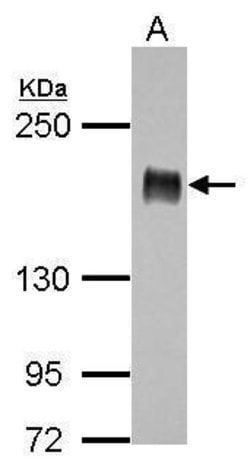
- Recommended positive controls: K562, THP-1
- Predicted reactivity: Mouse (81%), Rat (83%), Cat (86%), Pig (84%), Rabbit (82%), Sheep (87%), Rhesus Monkey (96%), Chimpanzee (98%), Bovine (86%), Guinea pig (84%)
- Store product as a concentrated solution
- Centrifuge briefly prior to opening the vial
- TLR3 (Toll-like receptor 3, CD283) is a member of the Toll-like receptor (TLR) family which plays a fundamental role in pathogen recognition and activation of innate immunity
- TLRs are highly conserved from drosophila to humans and share structural and functional similarities
- TLRs recognize pathogen-associated molecular patterns (PAMPs) that are expressed on infectious agents, and mediate the production of cytokines necessary for the development of effective immunity
- The various TLRs exhibit different patterns of expression
- TLR3 is most abundantly expressed in placenta and pancreas, and is restricted to the dendritic subpopulation of the leukocytes
- TLR3 recognizes dsRNA associated with viral infection, and induces the activation of NF-kappaB and the production of type I interferons
- Further, TLR3 may play a role in host defense against viruses, and the use of alternative polyadenylation sites to generate different length transcripts has been noted for the TLR3 gene
- Like its counterparts in Drosophila, TLRs signal through adaptor molecules and could constitute an important and unrecognized component of innate immunity in humans
- The TLR family is a phylogenetically conserved mediator of innate immunity that is essential for microbial recognition
- TLRs characterized so far activate the MyD88/interleukin-1 receptor-associated kinase (IRAK) signaling pathway
- TLR3 is the only human TLR which does not utilize MyD88 as an adaptor molecule instead utilizing TRIF in a signaling path which results in downstream activation of IRF-3 and NF-kB
- TLR3 activation leads not only to Type I interferon induction but also to other inflammatory cytokines which result in DC maturation
- TLR3 is known to recognize viral double-stranded (ds) RNA, a molecular pattern associated with viral infection
- Recently it has been shown to recognize viruses such as Influenza A and West Nile Virus and can mediate entry of at least West Nile Virus.