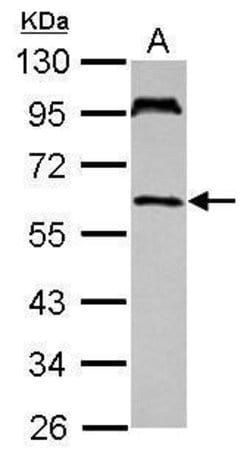
TOLLIP Polyclonal Antibody, Invitrogen™
Manufacturer: Thermo Scientific
Select a Size
| Pack Size | SKU | Availability | Price |
|---|---|---|---|
| Each of 1 | PIPA530747-Each-of-1 | In Stock | ₹ 49,439.50 |
PIPA530747 - Each of 1
In Stock
Quantity
1
Base Price: ₹ 49,439.50
GST (18%): ₹ 8,899.11
Total Price: ₹ 58,338.61
Antigen
TOLLIP
Classification
Polyclonal
Conjugate
Unconjugated
Gene
TOLLIP
Gene Alias
4930403G24Rik; 4931428G15Rik; adapter protein; EMBL:AAI33068.1}; FLJ33531; IL-1RAcPIP; toll interacting protein; toll-interacting protein; TOLLIP; tollip {ECO:0000312
Host Species
Rabbit
Purification Method
Antigen affinity chromatography
Regulatory Status
RUO
Gene ID (Entrez)
54472, 54473
Content And Storage
Store at 4°C short term. For long term storage, store at -20°C, avoiding freeze/thaw cycles.
Form
Liquid
Applications
Immunocytochemistry, Immunohistochemistry (Paraffin), Western Blot
Concentration
0.63 mg/mL
Formulation
0.1M tris glycine with 20% glycerol and 0.01% thimerosal; pH 7
Gene Accession No.
Q9H0E2, Q9QZ06
Gene Symbols
TOLLIP
Immunogen
Recombinant fragment corresponding to a region within amino acids 69 and 274 of Human Tollip
Quantity
100 μL
Primary or Secondary
Primary
Target Species
Human, Mouse
Product Type
Antibody
Isotype
IgG
Related Products



Description
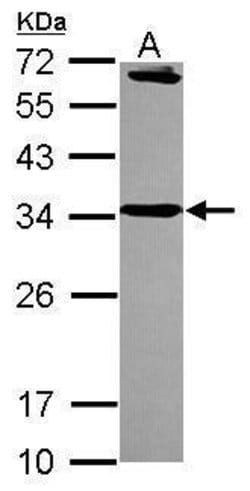
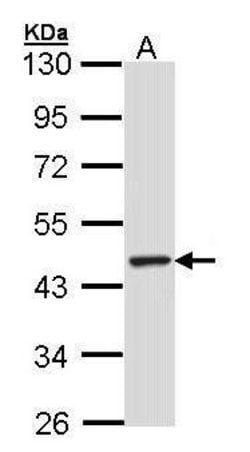
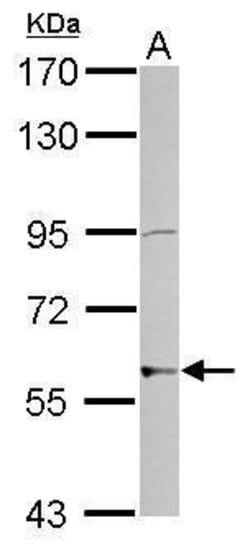
- Recommended positive controls: NT2D1, IMR32, U87-MG, MCF-7, CL1-5
- Predicted reactivity: Mouse (90%), Rat (90%), Pig (88%), Chicken (87%), Rhesus Monkey (100%), Bovine (89%)
- Store product as a concentrated solution
- Centrifuge briefly prior to opening the vial
- Toll-like receptors (TLRs) are evolutionarily conserved pattern-recognition molecules resembling the toll proteins that mediate antimicrobial responses in Drosophila
- These proteins recognize different microbial products during infection and serve as an important link between the innate and adaptive immune responses
- The TLRs act through adaptor molecules to activate various kinases and transcription factors so the organism can respond to potential infection
- These adaptor molecules include TOLLIP, MyD88, and TRIF
- TOLLIP associates directly with TLR2 and TLR 4, acting as an inhibitor to TLR activation
- This negative regulation of TLR signaling may serve to limit the production of proinflammatory mediators during infection and inflammation.