SMURF2 Polyclonal Antibody, Invitrogen™
Manufacturer: Thermo Scientific
Select a Size
| Pack Size | SKU | Availability | Price |
|---|---|---|---|
| Each of 1 | PIPA530900-Each-of-1 | In Stock | ₹ 46,591.50 |
PIPA530900 - Each of 1
In Stock
Quantity
1
Base Price: ₹ 46,591.50
GST (18%): ₹ 8,386.47
Total Price: ₹ 54,977.97
Antigen
SMURF2
Classification
Polyclonal
Conjugate
Unconjugated
Gene
Smurf2
Gene Alias
2810411E22Rik; AI558114; AI649275; E3 ubiquitin ligase SMURF2; E3 ubiquitin-protein ligase SMURF2; HECT-type E3 ubiquitin transferase SMURF2; hSMURF2; RGD1310067; SMAD specific E3 ubiquitin protein ligase 2; SMAD ubiquitination regulatory factor 2; SMAD-specific E3 ubiquitin-protein ligase 2; SMURF2
Host Species
Rabbit
Purification Method
Antigen affinity chromatography
Regulatory Status
RUO
Gene ID (Entrez)
64750
Content And Storage
Store at 4°C short term. For long term storage, store at -20°C, avoiding freeze/thaw cycles.
Form
Liquid
Applications
Immunohistochemistry (Paraffin), Western Blot
Concentration
0.82 mg/mL
Formulation
0.1M tris glycine with 20% glycerol and 0.01% thimerosal; pH 7
Gene Accession No.
Q9HAU4
Gene Symbols
Smurf2
Immunogen
Recombinant fragment corresponding to a region within amino acids 306 and 549 of Human SMURF2
Quantity
100 μL
Primary or Secondary
Primary
Target Species
Human
Product Type
Antibody
Isotype
IgG
Related Products



Description
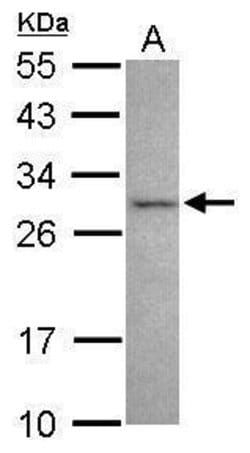
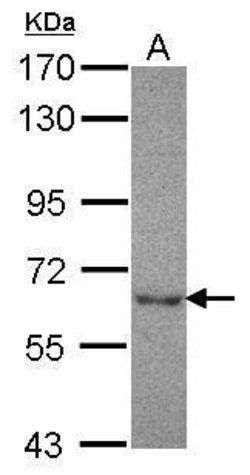
- Recommended positive controls: NT2D1, IMR32, U87-MG, MCF-7
- Predicted reactivity: Mouse (100%), Rat (100%), Zebrafish (96%), Xenopus laevis (96%)
- Store product as a concentrated solution
- Centrifuge briefly prior to opening the vial
- SMURF2 is an E3 ubiquitin-protein ligase which accepts ubiquitin from an E2 ubiquitin-conjugating enzyme in the form of a thioester and then directly transfers the ubiquitin to targeted substrates
- This protein interacts with SMAD1, SMAD2 and SMAD7 in order to trigger their ubiquitination and proteasome-dependent degradation
- It enhances the inhibitory activity of SMAD7 and reduces the transcriptional activity of SMAD2
- Coexpression of SMURF2 with SMAD1 results in considerable decrease in steady-state level of SMAD1 protein and a smaller decrease of SMAD2 level.