BTBD7 Polyclonal Antibody, Invitrogen™
Manufacturer: Thermo Scientific
Select a Size
| Pack Size | SKU | Availability | Price |
|---|---|---|---|
| Each of 1 | PIPA532003-Each-of-1 | In Stock | ₹ 48,905.50 |
PIPA532003 - Each of 1
In Stock
Quantity
1
Base Price: ₹ 48,905.50
GST (18%): ₹ 8,802.99
Total Price: ₹ 57,708.49
Antigen
BTBD7
Classification
Polyclonal
Conjugate
Unconjugated
Gene
BTBD7
Gene Alias
5730507E09Rik; 8030448M07; BTB (POZ) domain containing 7; BTB domain containing 7; BTB/POZ domain-containing protein 7; Btbd7; E130118E17Rik; function-unkown protein 1; Fup1; Kiaa1525; mKIAA1525; si:dkeyp-55f12.1; wu:fd08g07
Host Species
Rabbit
Purification Method
Antigen affinity chromatography
Regulatory Status
RUO
Gene ID (Entrez)
55727
Content And Storage
Store at 4°C short term. For long term storage, store at -20°C, avoiding freeze/thaw cycles.
Form
Liquid
Applications
Western Blot
Concentration
1 mg/mL
Formulation
PBS with 1% BSA, 20% glycerol and 0.01% thimerosal; pH 7
Gene Accession No.
Q9P203
Gene Symbols
BTBD7
Immunogen
Recombinant fragment corresponding to a region within amino acids 1 and 245 of Human BTBD7
Quantity
100 μL
Primary or Secondary
Primary
Target Species
Human
Product Type
Antibody
Isotype
IgG
Related Products
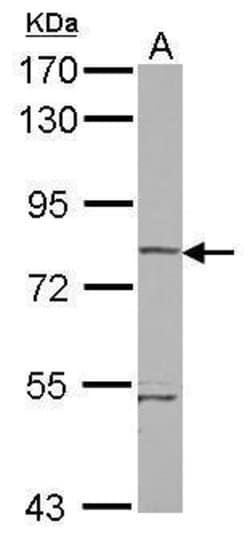
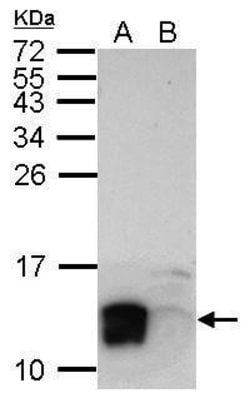

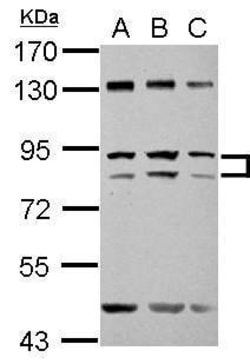
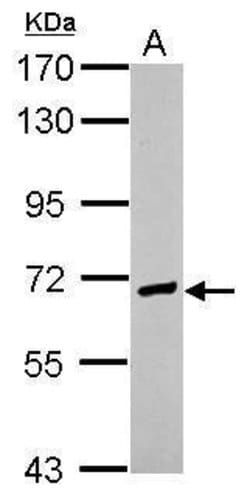
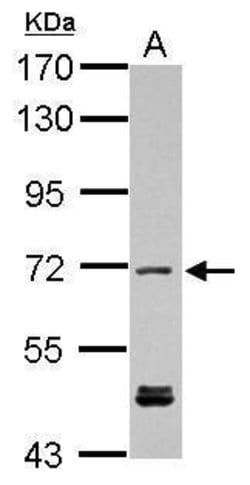
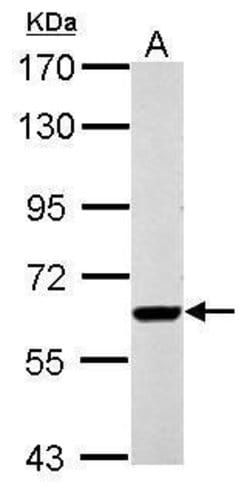
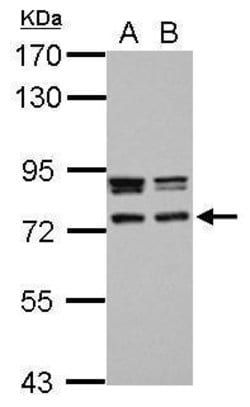
Description
- Recommended positive controls: U87-MG
- Predicted reactivity: Mouse (98%), Rat (99%), Zebrafish (81%)
- Store product as a concentrated solution
- Centrifuge briefly prior to opening the vial
- Acts as a mediator of epithelial dynamics and organ branching by promoting cleft progression
- Induced following accumulation of fibronectin in forming clefts, leading to local expression of the cell-scattering SNAIL2 and suppression of E-cadherin levels, thereby altering cell morphology and reducing cell-cell adhesion
- This stimulates cell separation at the base of forming clefts by local, dynamic intercellular gap formation and promotes cleft progression
- [UniProt]