LOXL2 Polyclonal Antibody, Invitrogen™
Manufacturer: Thermo Scientific
Select a Size
| Pack Size | SKU | Availability | Price |
|---|---|---|---|
| Each of 1 | PIPA532899-Each-of-1 | In Stock | ₹ 46,591.50 |
PIPA532899 - Each of 1
In Stock
Quantity
1
Base Price: ₹ 46,591.50
GST (18%): ₹ 8,386.47
Total Price: ₹ 54,977.97
Antigen
LOXL2
Classification
Polyclonal
Conjugate
Unconjugated
Gene
LOXL2
Gene Alias
1110004B06Rik; 4930526G11Rik; 9430067E15Rik; LOR2; Loxl2; Lysyl oxidase homolog 2; lysyl oxidase homolog 2; LOW QUALITY PROTEIN: lysyl oxidase homolog 2; lysyl oxidase like 2; lysyl oxidase related 2; lysyl oxidase-like 2; lysyl oxidase-like 2 delta e13; lysyl oxidase-like 2 protein; lysyl oxidase-like protein 2; Lysyl oxidase-related protein 2; lysyl oxidase-related protein WS9-14; WS9-14
Host Species
Rabbit
Purification Method
Antigen affinity chromatography
Regulatory Status
RUO
Gene ID (Entrez)
100058083, 100346678, 4017, 486118
Content And Storage
Store at 4°C short term. For long term storage, store at -20°C, avoiding freeze/thaw cycles.
Form
Liquid
Applications
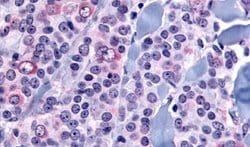
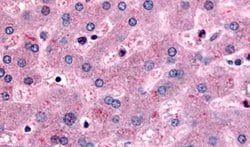
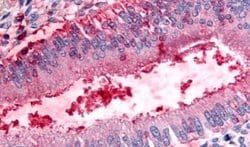
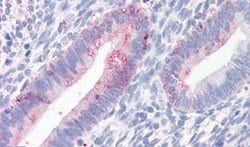
Immunohistochemistry (Paraffin)
Concentration
1 mg/mL
Formulation
PBS with 0.1% sodium azide
Gene Accession No.
Q9Y4K0
Gene Symbols
LOXL2
Immunogen
Synthetic 15 amino acid peptide from N-terminus of human LOXL2.
Quantity
50 μg
Primary or Secondary
Primary
Target Species
Canine, Equine, Human, Rabbit
Product Type
Antibody
Isotype
IgG
Related Products
Description
- Percent identity with other species by BLAST analysis: Human, Gorilla, Orangutan, Monkey, Marmoset, Dog, Bovine, Bat, Elephant, Panda, Horse, Rabbit (100%)
- This gene encodes a member of the lysyl oxidase gene family
- The prototypic member of the family is essential to the biogenesis of connective tissue, encoding an extracellular copper-dependent amine oxidase that catalyses the first step in the formation of crosslinks in collagens and elastin
- A highly conserved amino acid sequence at the C-terminus end appears to be sufficient for amine oxidase activity, suggesting that each family member may retain this function
- The N-terminus is poorly conserved and may impart additional roles in developmental regulation, senescence, tumor suppression, cell growth control, and chemotaxis to each member of the family.