MFI2 Polyclonal Antibody, Invitrogen™
Manufacturer: Thermo Scientific
Select a Size
| Pack Size | SKU | Availability | Price |
|---|---|---|---|
| Each of 1 | PIPA532920-Each-of-1 | In Stock | ₹ 47,036.50 |
PIPA532920 - Each of 1
In Stock
Quantity
1
Base Price: ₹ 47,036.50
GST (18%): ₹ 8,466.57
Total Price: ₹ 55,503.07
Antigen
MFI2
Classification
Polyclonal
Conjugate
Unconjugated
Gene
MELTF
Gene Alias
antigen p97 (melanoma associated) identified by monoclonal antibodies 133.2 and 96.5; CD228; MAP97; Melanoma-associated antigen p97; melanoma-associated antigen p97, isoform 2; melanotransferrin; MELTF; membrane-bound transferrin-like protein; membrane-bound transferrin-like protein p97; Mfi2; Mtf; MTF1; p97
Host Species
Rabbit
Purification Method
Antigen affinity chromatography
Regulatory Status
RUO
Gene ID (Entrez)
100008603, 100060123, 30060, 4241
Content And Storage
Store at 4°C short term. For long term storage, store at -20°C, avoiding freeze/thaw cycles.
Form
Liquid
Applications
Immunohistochemistry (Paraffin)
Concentration
1 mg/mL
Formulation
PBS with 0.1% sodium azide
Gene Accession No.
O97490, P08582, Q9R0R1
Gene Symbols
MELTF
Immunogen
Synthetic 15 amino acid peptide from N-terminus of human MFI2.
Quantity
50 μg
Primary or Secondary
Primary
Target Species
Equine, Human, Mouse, Non-human Primate, Rabbit
Product Type
Antibody
Isotype
IgG
Related Products
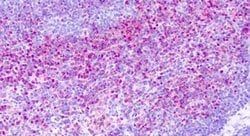
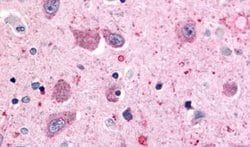
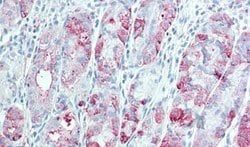
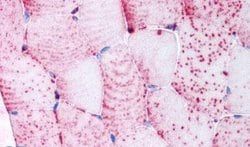
Description
- Percent identity with other species by BLAST analysis: Human, Gorilla, Gibbon, Marmoset, Mouse, Dog, Elephant, Panda, Horse, Rabbit (100%) Bovine, Hamster, Pig (93%)
- The protein encoded by this gene is a cell-surface glycoprotein found on melanoma cells
- The protein shares sequence similarity and iron-binding properties with members of the transferrin superfamily
- The importance of the iron binding function has not yet been identified
- This gene resides in the same region of chromosome 3 as members of the transferrin superfamily
- Alternative splicing results in two transcript variants.