PIPA533480
DRD2 Polyclonal Antibody, Invitrogen™
Manufacturer: Thermo Scientific
Select a Size
| Pack Size | SKU | Availability | Price |
|---|---|---|---|
| Each of 1 | PIPA533480-Each-of-1 | In Stock | ₹ 46,591.50 |
PIPA533480 - Each of 1
In Stock
Quantity
1
Base Price: ₹ 46,591.50
GST (18%): ₹ 8,386.47
Total Price: ₹ 54,977.97
Antigen
DRD2
Classification
Polyclonal
Conjugate
Unconjugated
Gene
DRD2
Gene Alias
D(2) dopamine receptor; D2 receptor; D2DR; D2R; Dopamine 2 receptor; Dopamine D2 receptor; dopamine receptor 2; dopamine receptor D2; dopamine receptor D2 isoform; Drd2; Drd-2; seven transmembrane helix receptor
Host Species
Rabbit
Purification Method
Antigen affinity chromatography
Regulatory Status
RUO
Gene ID (Entrez)
1813
Content And Storage
Store at 4°C short term. For long term storage, store at -20°C, avoiding freeze/thaw cycles.
Form
Liquid
Applications
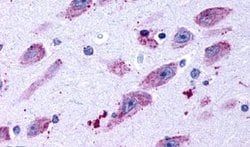
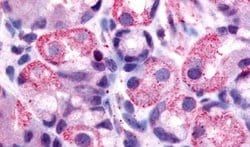
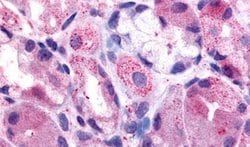
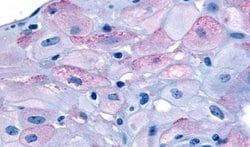
Immunohistochemistry (Paraffin)
Concentration
1 mg/mL
Formulation
PBS with 0.1% sodium azide
Gene Accession No.
P14416
Gene Symbols
DRD2
Immunogen
Synthetic 19 amino acid peptide from 3rd cytoplasmic domain of human DRD2.
Quantity
50 μg
Primary or Secondary
Primary
Target Species
Human
Product Type
Antibody
Isotype
IgG
Related Products
Description
- Percent identity with other species by BLAST analysis: Human, Chimpanzee, Gorilla, Marmoset (100%) Gibbon, Monkey, Rabbit (95%) Dog, Bovine, Panda, Horse, Pig (89%)
- The DRD2 Dopamine Receptor is involved in the neuromodulation of appetitive behaviors
- DRD2 may be linked to alcoholism and other substance-use disorders
- Mutations in DRD2 in mice lead to the suppression of reward behavior with morphine and to the reduction of spontaneous movements, a phenotype resembling Parkinsons disease
- Three alternatively spliced isoforms have been identified
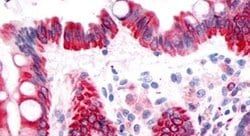
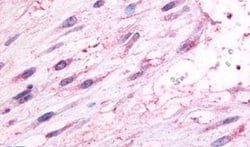
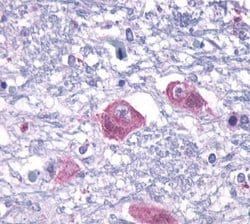
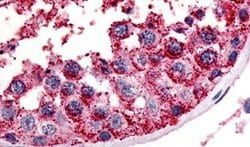
- DRD2 has been reported to be expressed in various regions of the brain, as well as in aorta, artery, eye, and spinal cord
- ESTs have been isolated from normal pituitary and in brain, colon, lung, pancreas, and skeletal muscle cancer libraries.