FPR1 Polyclonal Antibody, Invitrogen™
Manufacturer: Thermo Scientific
Select a Size
| Pack Size | SKU | Availability | Price |
|---|---|---|---|
| Each of 1 | PIPA533534-Each-of-1 | In Stock | ₹ 47,125.50 |
PIPA533534 - Each of 1
In Stock
Quantity
1
Base Price: ₹ 47,125.50
GST (18%): ₹ 8,482.59
Total Price: ₹ 55,608.09
Antigen
FPR1
Classification
Polyclonal
Conjugate
Unconjugated
Gene
FPR1
Gene Alias
fMet-Leu-Phe receptor; fMLF-R; FMLP; fMLP receptor; formyl peptide receptor 1; FPR; Fpr receptor; FPR1; FPR-1; lipoxin A4 receptor; LXA4R; N-formyl peptide receptor; N-formylpeptide chemoattractant receptor
Host Species
Rabbit
Purification Method
Antigen affinity chromatography
Regulatory Status
RUO
Gene ID (Entrez)
2357
Content And Storage
Store at 4°C short term. For long term storage, store at -20°C, avoiding freeze/thaw cycles.
Form
Liquid
Applications
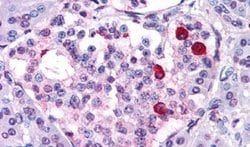
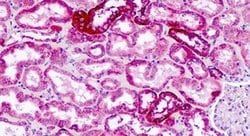
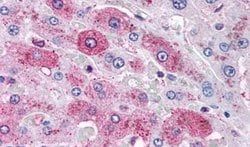
Immunohistochemistry (Paraffin)
Concentration
1 mg/mL
Formulation
PBS with 0.1% sodium azide
Gene Accession No.
P21462
Gene Symbols
FPR1
Immunogen
Synthetic 16 amino acid peptide from 3rd extracellular domain of human FPR1.
Quantity
50 μg
Primary or Secondary
Primary
Target Species
Human, Non-human Primate
Product Type
Antibody
Isotype
IgG
Related Products
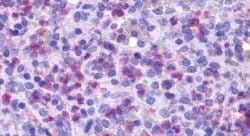
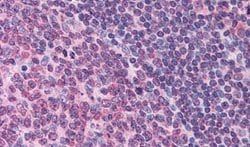
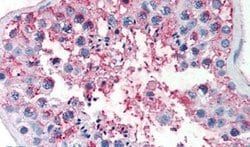
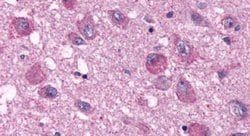

Description
- Percent identity with other species by BLAST analysis: Human, Chimpanzee, Monkey (100%) Gorilla (94%) Orangutan (88%)
- FPR1 is a member of chemoattractant/chemokine GPCRs expressed mainly on leukocytes, neutrophils and monocytes
- FPR1 is a seven transmembrane pertussis toxin-sensitive GPCR and binds to formylated peptides generated by bacteria resulting in leukocyte trafficking to the site of inflammation
- Ligand binding to FPR results in activation of multiple effectors including phospholipase C leading to calcium mobilization and PKC activation
- Other implications of FPR signaling include polarization of actin cytoskeleton, activation of various integrins, increased cell migration, phagocytosis, degranulation and release of reactive oxygen intermediates.