PIPA533547
FSHR Polyclonal Antibody, Invitrogen™
Manufacturer: Thermo Scientific
Select a Size
| Pack Size | SKU | Availability | Price |
|---|---|---|---|
| Each of 1 | PIPA533547-Each-of-1 | In Stock | ₹ 46,502.50 |
PIPA533547 - Each of 1
In Stock
Quantity
1
Base Price: ₹ 46,502.50
GST (18%): ₹ 8,370.45
Total Price: ₹ 54,872.95
Antigen
FSHR
Classification
Polyclonal
Conjugate
Unconjugated
Gene
FSHR
Gene Alias
follicle stimulating hormone receptor; follicle-stimulating hormone receptor; Follitropin receptor; FSH receptor; Fshr; FSH-R; FSHR1; FSHRO; LGR1; ODG1
Host Species
Rabbit
Purification Method
Antigen affinity chromatography
Regulatory Status
RUO
Gene ID (Entrez)
2492
Content And Storage
Store at 4°C short term. For long term storage, store at -20°C, avoiding freeze/thaw cycles.
Form
Liquid
Applications
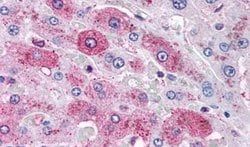
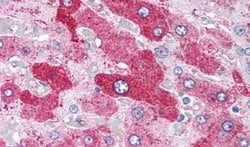
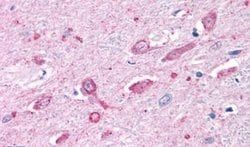
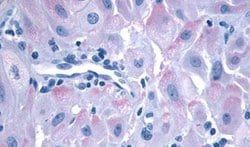
Immunohistochemistry (Paraffin)
Concentration
1 mg/mL
Formulation
PBS with 0.1% sodium azide
Gene Accession No.
P23945
Gene Symbols
FSHR
Immunogen
Synthetic 17 amino acid peptide from N-terminal extracellular domain of human FSHR.
Quantity
50 μg
Primary or Secondary
Primary
Target Species
Human, Non-human Primate
Product Type
Antibody
Isotype
IgG
Related Products
Description
- Percent identity with other species by BLAST analysis: Human, Gorilla, Monkey, Marmoset (100%) Gibbon, Dog, Bat, Elephant, Rabbit, Horse, Pig, Guinea pig (94%)
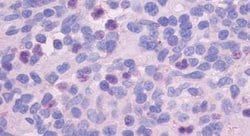
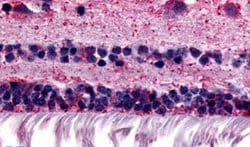
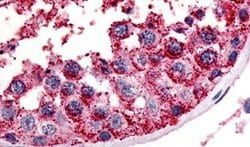
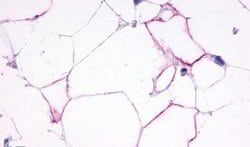
- Follicle-Stimulating Hormone Receptor (FSHR) expression has been reported in ovary, uterus, and testis
- ESTs have been isolated from testis libraries
- G-protein Coupled Receptors (GPCRs) comprise one of the largest families of signaling molecules with more than a thousand members currently predicted to exist
- All GPCRs share a structural motif consisting of seven membrane-spanning helices, and exist in both active and inactive forms
- An array of activating ligands participate in the conformation of GPCRs which leads to signaling via G-proteins and downstream effectors
- Ongoing studies have also shown the vast series of reactions which participate in the negative regulation of GPCRs
- This turn-off activity has tremendous implications for the physiological action of the cell, and continues to drive pharmacological research for new drug candidates
- Two blockbuster drugs which have been developed as GPCR-targeted pharmaceuticals are Zyprexa (Eli Lilly) and Claritin (Schering-Plough) which have multi-billion dollar shares of the mental health and allergy markets, respectively.