PIPA533599
GPR1 Polyclonal Antibody, Invitrogen™
Manufacturer: Thermo Scientific
Select a Size
| Pack Size | SKU | Availability | Price |
|---|---|---|---|
| Each of 1 | PIPA533599-Each-of-1 | In Stock | ₹ 46,502.50 |
PIPA533599 - Each of 1
In Stock
Quantity
1
Base Price: ₹ 46,502.50
GST (18%): ₹ 8,370.45
Total Price: ₹ 54,872.95
Antigen
GPR1
Classification
Polyclonal
Conjugate
Unconjugated
Gene
GPR1
Gene Alias
G protein-coupled receptor 1; GPR1; Gpr-1; G-protein coupled receptor 1; probable G-protein coupled receptor 1
Host Species
Rabbit
Purification Method
Antigen affinity chromatography
Regulatory Status
RUO
Gene ID (Entrez)
2825
Content And Storage
Store at 4°C short term. For long term storage, store at -20°C, avoiding freeze/thaw cycles.
Form
Liquid
Applications
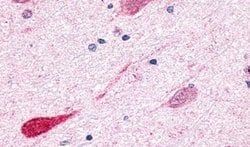
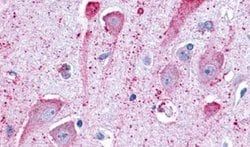
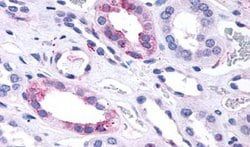
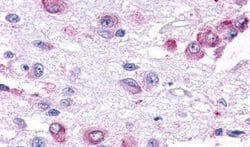
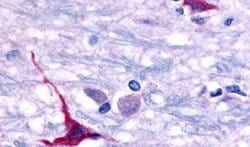
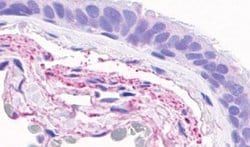
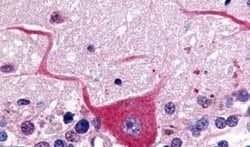
Immunohistochemistry (Paraffin)
Concentration
1 mg/mL
Formulation
PBS with 0.1% sodium azide
Gene Accession No.
P46091
Gene Symbols
GPR1
Immunogen
Synthetic 17 amino acid peptide from C-terminus of human GPR1.
Quantity
50 μg
Primary or Secondary
Primary
Target Species
Human
Product Type
Antibody
Isotype
IgG
Related Products

Description
- Percent identity with other species by BLAST analysis: Human, Gorilla, Gibbon, Monkey (100%) Marmoset, Bovine, Bat (94%) Rat, Elephant, Panda, Dog, Pig, Platypus (88%)
- The G-protein-coupled receptor (GPCR) superfamily is comprised of an estimated 600-1,000 members and is the largest known class of molecular targets with proven therapeutic value
- GPR1 is an orphan receptor for the inflammation-associated leukocyte chemoattractant chemerin, suggesting a role for this receptor in the regulation of inflammation
- In yeast, G protein-coupled receptor 1 senses glucose and controls filamentous growth
- It acts upstream of adenylate cyclase and is required for glucose activation of cAMP synthesis in concert with a glucose phosphorylation-dependent mechanism.