Bit1 Polyclonal Antibody, Invitrogen™
Manufacturer: Thermo Scientific
Select a Size
| Pack Size | SKU | Availability | Price |
|---|---|---|---|
| Each of 1 | PIPA554353-Each-of-1 | In Stock | ₹ 48,905.50 |
PIPA554353 - Each of 1
In Stock
Quantity
1
Base Price: ₹ 48,905.50
GST (18%): ₹ 8,802.99
Total Price: ₹ 57,708.49
Antigen
Bit1
Classification
Polyclonal
Conjugate
Unconjugated
Gene
Ptrh2
Gene Alias
A230072I16Rik; Bcl-2 inhibitor of transcription; bcl-2 inhibitor of transcription 1; BIT1; CFAP37; CGI-147; cilia and flagella associated protein 37; IMNEPD; OTTHUMP00000205936; peptidyl-tRNA hydrolase 2; peptidyl-tRNA hydrolase 2, mitochondrial; PTH; PTH 2; Pth2; Ptrh2; RGD1306819
Host Species
Rabbit
Purification Method
Antigen affinity chromatography
Regulatory Status
RUO
Gene ID (Entrez)
51651
Content And Storage
Store at 4°C short term. For long term storage, store at -20°C, avoiding freeze/thaw cycles.
Form
Liquid
Applications
Immunohistochemistry
Concentration
0.1 mg/mL
Formulation
PBS with 40% glycerol and 0.02% sodium azide; pH 7.2
Gene Accession No.
Q9Y3E5
Gene Symbols
Ptrh2
Immunogen
Recombinant protein corresponding to Human PTRH1
Quantity
100 μL
Primary or Secondary
Primary
Target Species
Human
Product Type
Antibody
Isotype
IgG
Related Products
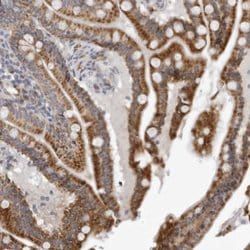
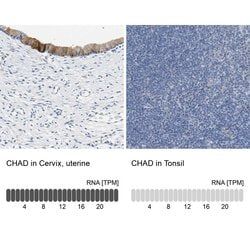

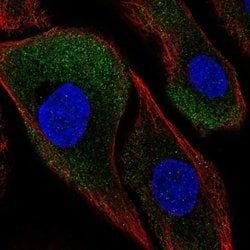


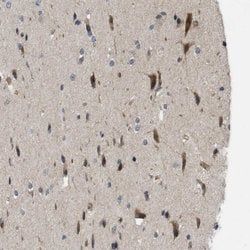
Description
- Immunogen sequence: VYLVHDELDK PLGRLALKLG GSARGHNGVR SCISCLNSNA MPRLRVGIGR PAHPEAVQAH VLGCFSPAEQ ELLPLLLDRA TD Highest antigen sequence identity to the following orthologs: Mouse - 84%, Rat - 84%
- The protein encoded by this gene is a mitochondrial protein with two putative domains, an N-terminal mitochondrial localization sequence, and a UPF0099 domain
- In vitro assays suggest that this protein possesses peptidyl-tRNA hydrolase activity, to release the peptidyl moiety from tRNA, thereby preventing the accumulation of dissociated peptidyl-tRNA that could reduce the efficiency of translation
- This protein also plays a role regulating cell survival and death
- It promotes survival as part of an integrin-signaling pathway for cells attached to the extracellular matrix characterized by intellectual disability, postnatal microcephaly, progressive cerebellar atrophy, hearing impairment, polyneuropathy, failure to thrive, and organ fibrosis with exocrine pancreas insufficiency
- Alternative splicing results in multiple transcript variants encoding different isoforms.