CDHR1 Polyclonal Antibody, Invitrogen™
Manufacturer: Thermo Scientific
Select a Size
| Pack Size | SKU | Availability | Price |
|---|---|---|---|
| Each of 1 | PIPA557832-Each-of-1 | In Stock | ₹ 49,261.50 |
PIPA557832 - Each of 1
In Stock
Quantity
1
Base Price: ₹ 49,261.50
GST (18%): ₹ 8,867.07
Total Price: ₹ 58,128.57
Antigen
CDHR1
Classification
Polyclonal
Conjugate
Unconjugated
Gene
CDHR1
Gene Alias
Cadherin; cadherin related family member 1; cadherin-related family member 1; cadherin-related family member 1a; cdhr1; cdhr1a; CORD15; DKFZp434A132; KIAA1775; mKIAA1775; MT-protocadherin; pcdh21; Photoreceptor cadherin; photoreceptor protocadherin; prCAD; protocadherin 21; protocadherin; prCAD; protocadherin-21; RP65
Host Species
Rabbit
Purification Method
Antigen affinity chromatography
Regulatory Status
RUO
Gene ID (Entrez)
92211
Content And Storage
Store at 4°C short term. For long term storage, store at -20°C, avoiding freeze/thaw cycles.
Form
Liquid
Applications
Immunohistochemistry
Concentration
0.1 mg/mL
Formulation
PBS with 40% glycerol and 0.02% sodium azide; pH 7.2
Gene Accession No.
Q96JP9
Gene Symbols
CDHR1
Immunogen
Recombinant protein corresponding to Human CDHR1
Quantity
100 μL
Primary or Secondary
Primary
Target Species
Human
Product Type
Antibody
Isotype
IgG
Related Products
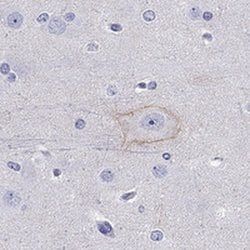
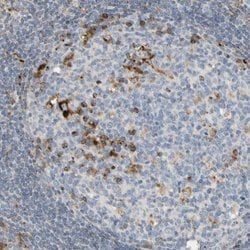

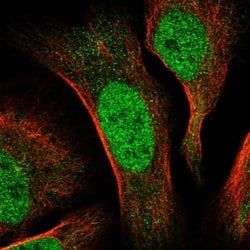

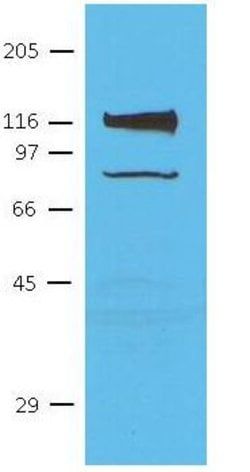
Description
- Immunogen sequence: TPYYGYVYED TLPGSEVLKV VAMDGDRGKP NRILYSLVNG NDGAFEINET SGAISITQSP AQLQREVYEL HVQVTE Highest antigen sequence identity to the following orthologs: Mouse - 84%, Rat - 86%
- This gene is a member of the cadherin superfamily of calcium-dependent cell-cell adhesion molecules
- This non-classical cadherin appears to be exclusively expressed in the mitral and tufted cells in the main and accessory olfactory bulbs of the brain, suggesting a possible role in the formation and maintenance of neuronal networks
- Alternatively spliced transcript variants encoding different isoform have been identified.