AKR1E2 Polyclonal Antibody, Invitrogen™
Manufacturer: Thermo Scientific
Select a Size
| Pack Size | SKU | Availability | Price |
|---|---|---|---|
| Each of 1 | PIPA558123-Each-of-1 | In Stock | ₹ 52,332.00 |
PIPA558123 - Each of 1
In Stock
Quantity
1
Base Price: ₹ 52,332.00
GST (18%): ₹ 9,419.76
Total Price: ₹ 61,751.76
Antigen
AKR1E2
Classification
Polyclonal
Conjugate
Unconjugated
Gene
AKR1E2
Gene Alias
1,5-anhydro-D-fructose reductase; AF reductase; Akr1cl2; Akr1e1; Akr1e2; AKRDC1; Aldo-keto reductase family 1 member C-like protein 2; aldo-keto reductase family 1 member E2; aldo-keto reductase family 1, member C-like 2; aldo-keto reductase family 1, member E1; aldo-keto reductase family 1, member E2; aldo-keto reductase loopADR; htAKR; hTSP; LoopADR; Testis aldo-keto reductase; Testis-specific protein
Host Species
Rabbit
Purification Method
Antigen affinity chromatography
Regulatory Status
RUO
Gene ID (Entrez)
83592
Content And Storage
Store at 4°C short term. For long term storage, store at -20°C, avoiding freeze/thaw cycles.
Form
Liquid
Applications
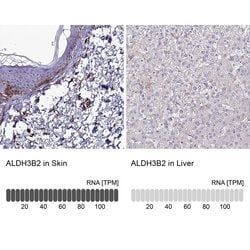
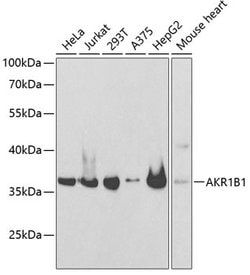
Immunohistochemistry, Western Blot
Concentration
0.3 mg/mL
Formulation
PBS with 40% glycerol and 0.02% sodium azide; pH 7.2
Gene Accession No.
Q96JD6
Gene Symbols
AKR1E2
Immunogen
Recombinant protein corresponding to Human AKR1E2
Quantity
100 μL
Primary or Secondary
Primary
Target Species
Human
Product Type
Antibody
Isotype
IgG
Related Products




Description
- Immunogen sequence: MGFKPPHPEW IMSCSELSFC LSHPRVQDLP LDESNMVIPS DTDFLDTWEA MEDLVITGLV KNIG Highest antigen sequence identity to the following orthologs: Mouse - 44%, Rat - 48%
- The protein encoded by this gene is a member of the aldo-keto reductase superfamily
- Members in this family are characterized by their structure (evolutionarily highly conserved TIM barrel) and function (NAD(P)H-dependent oxido-reduction of carbonyl groups)
- Transcripts of this gene have been reported in specimens of human testis
- Alternative splicing results in multiple transcript variants.