THRSP Polyclonal Antibody, Invitrogen™
Manufacturer: Thermo Scientific
Select a Size
| Pack Size | SKU | Availability | Price |
|---|---|---|---|
| Each of 1 | PIPA559235-Each-of-1 | In Stock | ₹ 48,905.50 |
PIPA559235 - Each of 1
In Stock
Quantity
1
Base Price: ₹ 48,905.50
GST (18%): ₹ 8,802.99
Total Price: ₹ 57,708.49
Antigen
THRSP
Classification
Polyclonal
Conjugate
Unconjugated
Gene
THRSP
Gene Alias
lipogenic protein 1; Lipogenic protein S14; Lpgp; LPGP1; S14; S14MGC21659; Spot 14 protein; SPOT14; SPOT14 homolog; THRP; Thrsp; thyroid hormone responsive; thyroid hormone responsive (SPOT14 homolog, rat); thyroid hormone responsive SPOT14; thyroid hormone responsive SPOT14 homolog; thyroid hormone-inducible hepatic protein
Host Species
Rabbit
Purification Method
Antigen affinity chromatography
Regulatory Status
RUO
Gene ID (Entrez)
7069
Content And Storage
Store at 4°C short term. For long term storage, store at -20°C, avoiding freeze/thaw cycles.
Form
Liquid
Applications
Immunocytochemistry, Immunohistochemistry
Concentration
0.2 mg/mL
Formulation
PBS with 40% glycerol and 0.02% sodium azide; pH 7.2
Gene Accession No.
Q92748
Gene Symbols
THRSP
Immunogen
Recombinant protein corresponding to Human THRSP
Quantity
100 μL
Primary or Secondary
Primary
Target Species
Human
Product Type
Antibody
Isotype
IgG
Related Products

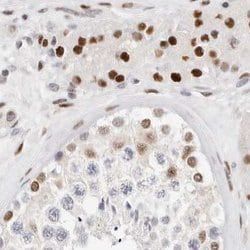
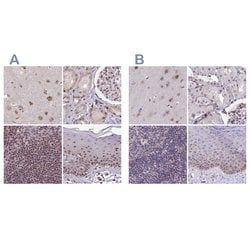
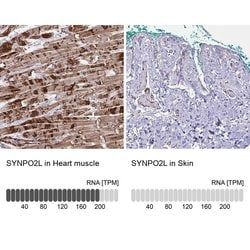
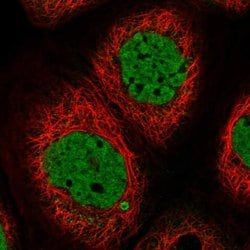


Description
- Immunogen sequence: TYFTMLKAIC VDVDHGLLPR EEWQAKVAGS EENGTAETEE VEDESASGEL DLEAQFHLHF SSLHHILMHL TEKAQEVTRK YQEMT Highest antigen sequence identity to the following orthologs: Mouse - 80%, Rat - 80%
- The protein encoded by this gene is similar to the gene product of S14, a rat gene whose expression is limited to liver and adipose tissue and is controlled by nutritional and hormonal factors
- This gene has been shown to be expressed in liver and adipocytes, particularly in lipomatous modules
- It is also found to be expressed in lipogenic breast cancers, which suggests a role in controlling tumor lipid metabolism.