PDCD7 Polyclonal Antibody, Invitrogen™
Manufacturer: Thermo Scientific
Select a Size
| Pack Size | SKU | Availability | Price |
|---|---|---|---|
| Each of 1 | PIPA561952-Each-of-1 | In Stock | ₹ 48,905.50 |
PIPA561952 - Each of 1
In Stock
Quantity
1
Base Price: ₹ 48,905.50
GST (18%): ₹ 8,802.99
Total Price: ₹ 57,708.49
Antigen
PDCD7
Classification
Polyclonal
Conjugate
Unconjugated
Gene
Pdcd7
Gene Alias
apoptosis-related protein ES18; C80112; ES18; H MGC22015; hES18; LOW QUALITY PROTEIN: programmed cell death protein 7; MGC22015; PDCD7; programmed cell death 7; programmed cell death protein 7; Programmed cell death protein 7-like protein; U11/U12 snRNP 59K
Host Species
Rabbit
Purification Method
Antigen affinity chromatography
Regulatory Status
RUO
Gene ID (Entrez)
10081
Content And Storage
Store at 4°C short term. For long term storage, store at -20°C, avoiding freeze/thaw cycles.
Form
Liquid
Applications
Immunocytochemistry, Immunohistochemistry
Concentration
0.3 mg/mL
Formulation
PBS with 40% glycerol and 0.02% sodium azide; pH 7.2
Gene Accession No.
Q8N8D1
Gene Symbols
Pdcd7
Immunogen
Recombinant protein corresponding to Human PDCD7
Quantity
100 μL
Primary or Secondary
Primary
Target Species
Human
Product Type
Antibody
Isotype
IgG
Related Products
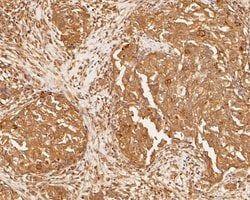
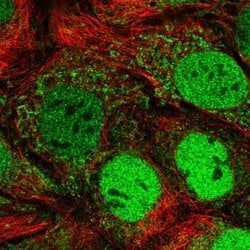
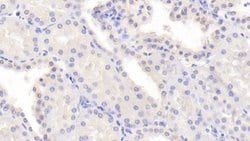
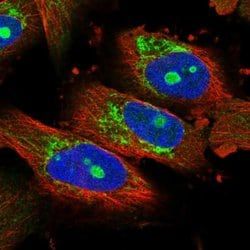

Description
- Immunogen sequence: RWRVKCVQEV EEKKREQELK AAADGVLSEV RKKQADTKRM VDILRALEKL RKLRKEAAAR KGVCPPASAD ETFTHHLQRL Highest antigen sequence identity to the following orthologs: Mouse - 96%, Rat - 94%
- PDCD7 is a protein with sequence similarity to a mouse protein originally identified in embryonic stem cells
- In mouse T-cell lines, this protein appears to be related to glucocorticoid- and staurine-induced apoptotic pathways, and to be linked to ceramide-mediated signaling
- These observations suggest that this gene product is involved in specific apoptotic processes in T-cells
- This gene encodes a protein with sequence similarity to a mouse protein originally identified in embryonic stem cells
- In mouse T-cell lines, this protein appears to be related to glucocorticoid- and staurine-induced apoptotic pathways, and to be linked to ceramide-mediated signaling
- These observations suggest that this gene product is involved in specific apoptotic processes in T-cells.