PIPA564004
RCN1 Polyclonal Antibody, Invitrogen™
Manufacturer: Thermo Scientific
Select a Size
| Pack Size | SKU | Availability | Price |
|---|---|---|---|
| Each of 1 | PIPA564004-Each-of-1 | In Stock | ₹ 48,905.50 |
PIPA564004 - Each of 1
In Stock
Quantity
1
Base Price: ₹ 48,905.50
GST (18%): ₹ 8,802.99
Total Price: ₹ 57,708.49
Antigen
RCN1
Classification
Polyclonal
Conjugate
Unconjugated
Gene
RCN1
Gene Alias
epididymis secretory protein Li 84; FLJ37041; HEL-S-84; PIG20; proliferation-inducing gene 20; Rca1; RCAL; Rcn; RCN1; reticulocalbin 1; reticulocalbin 1, EF-hand calcium binding domain; reticulocalbin-1
Host Species
Rabbit
Purification Method
Antigen affinity chromatography
Regulatory Status
RUO
Gene ID (Entrez)
5954
Content And Storage
Store at 4°C short term. For long term storage, store at -20°C, avoiding freeze/thaw cycles.
Form
Liquid
Applications
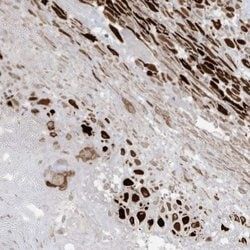
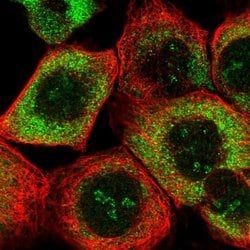
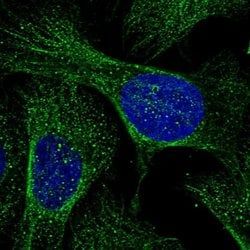
Immunohistochemistry, Western Blot
Concentration
0.1 mg/mL
Formulation
PBS with 40% glycerol and 0.02% sodium azide; pH 7.2
Gene Accession No.
Q15293
Gene Symbols
RCN1
Immunogen
Recombinant protein corresponding to Human RCN1
Quantity
100 μL
Primary or Secondary
Primary
Target Species
Human
Product Type
Antibody
Isotype
IgG
Related Products
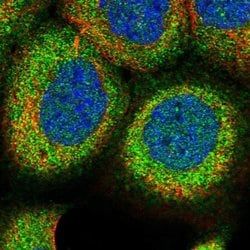
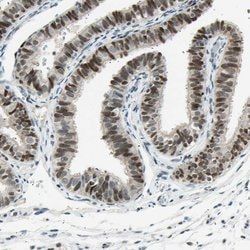

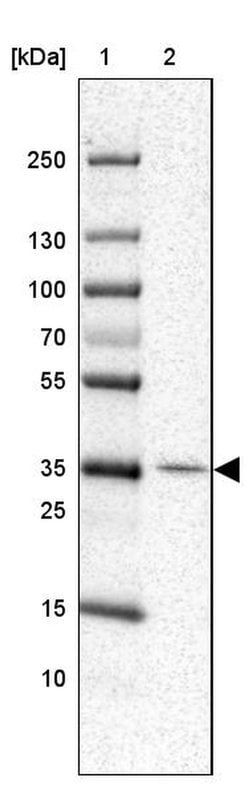
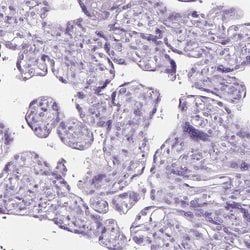
Description
- Immunogen sequence: KPTVRKERVV RPDSELGERP PEDNQSFQYD HEA Highest antigen sequence identity to the following orthologs: Mouse - 100%, Rat - 100%
- Reticulocalbin 1 is a calcium-binding protein located in the lumen of the ER
- The protein contains six conserved regions with similarity to a high affinity Ca(+2)-binding motif, the EF-hand
- High conservation of amino acid residues outside of these motifs, in comparison to mouse reticulocalbin, is consistent with a possible biochemical function besides that of calcium binding
- In human endothelial and prostate cancer cell lines this protein localizes to the plasma membrane.