CIITA Polyclonal Antibody, Invitrogen™
Manufacturer: Thermo Scientific
Select a Size
| Pack Size | SKU | Availability | Price |
|---|---|---|---|
| Each of 1 | PIPA568760-Each-of-1 | In Stock | ₹ 46,057.50 |
PIPA568760 - Each of 1
In Stock
Quantity
1
Base Price: ₹ 46,057.50
GST (18%): ₹ 8,290.35
Total Price: ₹ 54,347.85
Antigen
CIITA
Classification
Polyclonal
Conjugate
Unconjugated
Gene
CIITA
Gene Alias
C2ta; CIITA; CIITAIV; class II major histocompatibility complex transactivator; class II transactivator; class II, major histocompatibility complex, transactivator; EG669998; Gm9475; MH NLRA; MHC class II transactivator; MHC class II transactivator type I; MHC class II transactivator type III; MHC class II transactivator type IV; MHC2TA; NLR family, acid domain containing; NLRA; nucleotide-binding oligomerization domain, leucine rich repeat and acid domain containing
Host Species
Rabbit
Purification Method
Affinity chromatography
Regulatory Status
RUO
Gene ID (Entrez)
12265
Content And Storage
-20° C, Avoid Freeze/Thaw Cycles
Form
Liquid
Applications
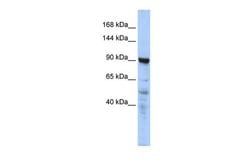
Western Blot
Concentration
0.5 mg/mL
Formulation
PBS with 2% sucrose and 0.09% sodium azide
Gene Accession No.
P79621
Gene Symbols
CIITA
Immunogen
synthetic peptide directed towards the C terminal region of mouse CIITA
Quantity
100 μL
Primary or Secondary
Primary
Target Species
Mouse
Product Type
Antibody
Isotype
IgG
Related Products



Description
- This target displays homology in the following species: Dog: 100%; Human: 79%; Mouse: 100%; Rat: 93% CIITA contains an acidic transcriptional activation domain, four LRRs (leucine-rich repeats) and a GTP binding domain
- It is located in the nucleus and acts as a positive regulator of class II major histocompatibility complex gene transcription, and is referred to as the "emaster control factor"e for the expression of these genes
- CIITA also binds GTP and uses GTP binding to facilitate its own transport into the nucleus
- Once in the nucleus it does not bind DNA but rather uses an intrinsic acetyltransferase (AT) activity to act in a coactivator-like fashion
- Mutations in this gene have been associated with bare lymphocyte syndrome type II (also known as hereditary MHC class II deficiency or HLA class II-deficient combined immunodeficiency), increased susceptibility to rheumatoid arthritis, multiple sclerosis, and possibly myocardial infarction.