Ceruloplasmin Polyclonal Antibody, Invitrogen™
Manufacturer: Thermo Scientific
Select a Size
| Pack Size | SKU | Availability | Price |
|---|---|---|---|
| Each of 1 | PIPA577921-Each-of-1 | In Stock | ₹ 48,905.50 |
PIPA577921 - Each of 1
In Stock
Quantity
1
Base Price: ₹ 48,905.50
GST (18%): ₹ 8,802.99
Total Price: ₹ 57,708.49
Antigen
Ceruloplasmin
Classification
Polyclonal
Conjugate
Unconjugated
Gene
CP
Gene Alias
bilitranslocase; CERP; Ceruloplasmin; ceruloplasmin (ferroxidase); CP; CP-2; D3Ertd555e; ferroxidase
Host Species
Rabbit
Purification Method
Antigen affinity chromatography
Regulatory Status
RUO
Gene ID (Entrez)
12870, 1356, 24268
Content And Storage
Store at 4°C short term. For long term storage, store at -20°C, avoiding freeze/thaw cycles.
Form
Liquid
Applications
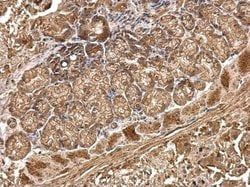
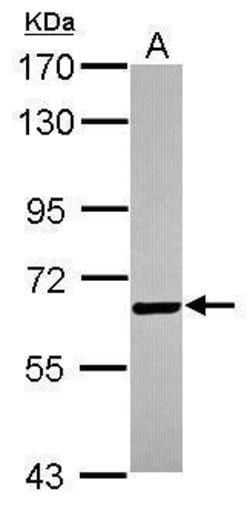
Immunohistochemistry (Paraffin), Western Blot
Concentration
0.5 mg/mL
Formulation
0.1M tris glycine with 10% glycerol and 0.01% thimerosal; pH 7
Gene Accession No.
P00450, P13635, Q61147
Gene Symbols
CP
Immunogen
Recombinant protein encompassing a sequence within the center region of human Ceruloplasmin. The exact sequence is proprietary.
Quantity
100 μL
Primary or Secondary
Primary
Target Species
Human, Mouse, Rat
Product Type
Antibody
Isotype
IgG
Related Products


Description
- Positive Control: human plasma Predicted Reactivity: Pig (89%), Sheep (87%), Bovine (87%) Store product as a concentrated solution
- Centrifuge briefly prior to opening the vial
- Ceruloplasmin encodes a protein that is a metalloprotein that binds most of the copper in plasma and is involved in the peroxidation of Fe(II)transferrin to Fe(III) transferrin
- Mutations in this gene cause aceruloplasminemia, which results in iron accumulation and tissue damage, and is associated with diabetes and neurologic abnormalities.