ST1709100UG
MilliporeSigma™ anti-SKP1A Clone: 1H8,
Manufacturer: MilliporeSigma™
Select a Size
| Pack Size | SKU | Availability | Price |
|---|---|---|---|
| Each of 1 | ST1709100UG-Each-of-1 | In Stock | ₹ 48,505.00 |
ST1709100UG - Each of 1
In Stock
Quantity
1
Base Price: ₹ 48,505.00
GST (18%): ₹ 8,730.90
Total Price: ₹ 57,235.90
Antigen
SKP1A
Classification
Monoclonal
Conjugate
Unconjugated
Host Species
Mouse
Quantity
100 μg
Primary or Secondary
Primary
Target Species
Human
Form
Purified
Applications
Immunocytochemistry
Clone
1H8
Formulation
In PBS, pH 7.2.
Immunogen
A recombinant polypeptide corresponding to amino acids of 53-161 human SKP1A, expressed as a GST fusion protein
Regulatory Status
RUO
Test Specificity
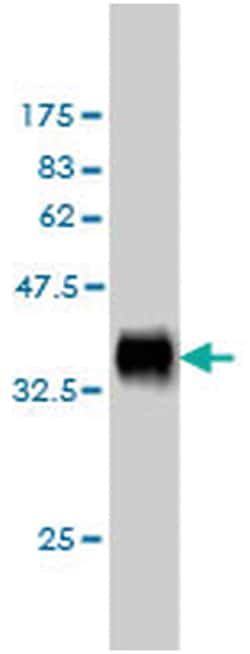
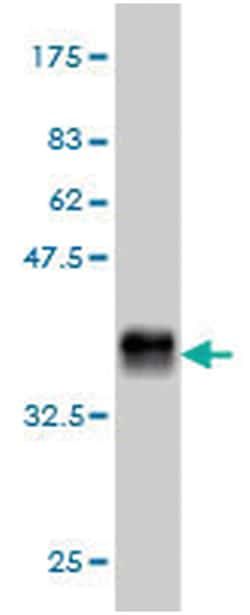
Recognizes the ∽18kDa SKP1A protein in HeLa cells.
Content And Storage
−20°C
Isotype
IgG2a
Related Products

Description
- Specifically detects SKP1A Clone: 1H8 in Human samples, and it is validated for Immunocytochemistry This gene encodes a component of SCF complexes, which are composed of this protein, cullin 1, a ring-box protein, and one member of the F-box family of proteins
- This protein binds directly to the F-box motif found in F-box proteins
- SCF complexes are involved in the regulated ubiquitination of specific protein substrates, which targets them for degradation by the proteosome
- Specific F-box proteins recognize different target protein(s), and many specific SCF substrates have been identified including regulators of cell cycle progression and development
- Studies have also characterized the protein as an RNA polymerase II elongation factor
- Alternative splicing of this gene results in two transcript variants
- A related pseudogene has been identified on chromosome 7.