01-674-398
WNT4 Polyclonal Antibody, Invitrogen™
Manufacturer: Thermo Scientific
Select a Size
| Pack Size | SKU | Availability | Price |
|---|---|---|---|
| Each of 1 | 01-674-398-Each-of-1 | In Stock | ₹ 46,502.50 |
01-674-398 - Each of 1
In Stock
Quantity
1
Base Price: ₹ 46,502.50
GST (18%): ₹ 8,370.45
Total Price: ₹ 54,872.95
Antigen
WNT4
Classification
Polyclonal
Conjugate
Unconjugated
Gene
Wnt4
Gene Alias
protein Wnt-4; SERKAL; signal molecule; UNQ426/PRO864; wingless-related MMTV integration site 4; wingless-type MMTV integration site family member 4; wingless-type MMTV integration site family, member 4; Wnt family member 4; WNT4; Wnt-4
Host Species
Goat
Purification Method
Ammonium sulfate precipitation
Regulatory Status
RUO
Gene ID (Entrez)
54361
Content And Storage
-20° C, Avoid Freeze/Thaw Cycles
Form
Liquid
Applications
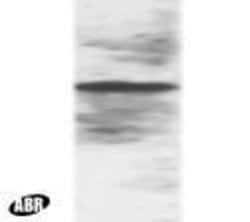
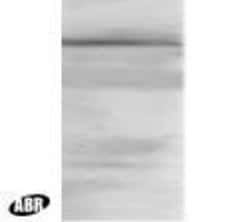
Immunocytochemistry, Western Blot
Concentration
0.5 mg/mL
Formulation
TBS with 0.5% BSA and 0.02% sodium azide; pH 7.3
Gene Accession No.
P56705
Gene Symbols
Wnt4
Immunogen
Internal sequence corresponding to amino acids C-SNWLYLAKLSSVGS.
Quantity
100 μg
Primary or Secondary
Primary
Target Species
Human
Product Type
Antibody
Isotype
IgG
Related Products




Description
- This antibody is predicted to react with mouse and rat based on sequence homology
- This antibody is tested in Peptide ELISA: antibody detection limit dilution 4,000
- The WNT gene family consists of structurally related genes which encode secreted signaling proteins
- These proteins have been implicated in oncogenesis and in several developmental processes, including regulation of cell fate and patterning during embryogenesis
- This gene is a member of the WNT gene family, and is the first signaling molecule shown to influence the sex-determination cascade
- It encodes a protein which shows 98% amino acid identity to the Wnt4 protein of mouse and rat
- This gene and a nuclear receptor known to antagonize the testis-determining factor play a concerted role in both the control of female development and the prevention of testes formation
- This gene and another two family members, WNT2 and WNT7B, may be associated with abnormal proliferation in breast tissue
- Mutations in this gene can result in Rokitansky-Kuster-Hauser syndrome and in SERKAL syndrome.