KLF8 Polyclonal Antibody, Invitrogen™
Manufacturer: Thermo Scientific
Select a Size
| Pack Size | SKU | Availability | Price |
|---|---|---|---|
| Each of 1 | 01-674-645-Each-of-1 | In Stock | ₹ 46,502.50 |
01-674-645 - Each of 1
In Stock
Quantity
1
Base Price: ₹ 46,502.50
GST (18%): ₹ 8,370.45
Total Price: ₹ 54,872.95
Antigen
KLF8
Classification
Polyclonal
Conjugate
Unconjugated
Gene
KLF8
Gene Alias
A830097P10Rik; Basic krueppel-like factor 3; basic kruppel-like factor 3; BKLF3; DKFZp686O08126; DXS741; KLF8; Klf8-ps1; Krueppel-like factor 8; Kruppel like factor 8; Kruppel-like factor 8; Kruppel-like factor 8, pseudogene 1; LOW QUALITY PROTEIN: Krueppel-like factor 8; MGC138314; RGD1565831; RP13-1021K9.1; zinc finger protein 741; ZNF74; ZNF741
Host Species
Goat
Purification Method
Ammonium sulfate precipitation
Regulatory Status
RUO
Gene ID (Entrez)
11279
Content And Storage
-20° C, Avoid Freeze/Thaw Cycles
Form
Liquid
Applications
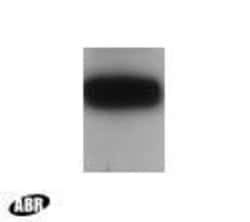
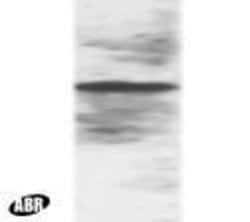
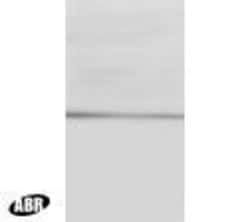
Immunohistochemistry, Western Blot
Concentration
0.5 mg/mL
Formulation
TBS with 0.5% BSA and 0.02% sodium azide; pH 7.3
Gene Accession No.
O95600
Gene Symbols
KLF8
Immunogen
Synthetic peptide corresponding to the N terminus amino acids VDMDKLINNLEVQ.
Quantity
100 μg
Primary or Secondary
Primary
Target Species
Human
Product Type
Antibody
Isotype
IgG
Related Products





Description
- This antibody is predicted to react with porcine based on sequence homology
- This antibody is tested in Peptide ELISA: antibody detection limit dilution 32,000
- This gene encodes a protein which is a member of the Sp/KLF family of transcription factors
- Members of this family contain a C-terminal DNA-binding domain with three Kruppel-like zinc fingers
- The encoded protein is thought to play an important role in the regulation of epithelial to mesenchymal transition, a process which occurs normally during development but also during metastasis
- A pseudogene has been identified on chromosome 16
- Alternative splicing results in multiple transcript variants.