MAD1 Monoclonal Antibody (9B10), Invitrogen™
Manufacturer: Thermo Scientific
Select a Size
| Pack Size | SKU | Availability | Price |
|---|---|---|---|
| Each of 1 | 01-674-934-Each-of-1 | In Stock | ₹ 67,951.50 |
01-674-934 - Each of 1
In Stock
Quantity
1
Base Price: ₹ 67,951.50
GST (18%): ₹ 12,231.27
Total Price: ₹ 80,182.77
Antigen
MAD1
Classification
Monoclonal
Concentration
0.9 mg/mL
Formulation
PBS with 0.1% sodium azide
Gene Accession No.
Q9Y6D9
Gene Symbols
MAD1L1
Immunogen
Recombinant full length Mad1 protein.
Quantity
100 μL
Primary or Secondary
Primary
Target Species
Human
Product Type
Antibody
Isotype
IgG2b
Applications
Flow Cytometry, Immunocytochemistry, Immunoprecipitation
Clone
9B10
Conjugate
Unconjugated
Gene
MAD1L1
Gene Alias
AI173502; AW550425; coiled-coil domain-containing protein MAD1; hMAD1; HsMAD1; Mad1; MAD1 mitotic arrest deficient 1-like 1; MAD1 mitotic arrest deficient like 1; MAD1 mitotic arrest deficient-like 1; MAD1 mitotic arrest deficient-like 1 (yeast); MAD1L1; MAD1-like protein 1; mitotic arrest deficient 1-like 1; mitotic arrest deficient 1-like protein 1; Mitotic arrest deficient protein 1; Mitotic checkpoint MAD1 protein homolog; mitotic spindle assembly checkpoint protein MAD1; mitotic-arrest deficient 1, yeast, homolog-like 1; MXD1; PIG9; Spindle assembly checkpoint component MAD1; Tax-binding protein 181; TP53I9; tumor protein p53 inducible protein 9; TXBP181; YGL086W
Host Species
Mouse
Purification Method
Protein A
Regulatory Status
RUO
Gene ID (Entrez)
8379
Content And Storage
Store at 4°C short term. For long term storage, store at -20°C, avoiding freeze/thaw cycles.
Form
Liquid
Related Products
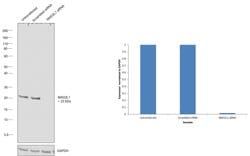
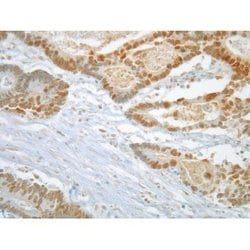
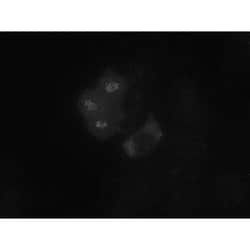
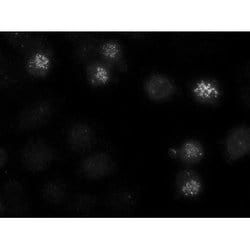


Description
- MAX dimerization protein belongs to a subfamily of MAX-interacting proteins
- This protein competes with MYC for binding to MAX to form a sequence-specific DNA-binding complex, acts as a transcriptional repressor (while MYC appears to function as an activator) and is a candidate tumor suppressor.