FosB Monoclonal Antibody (83B1138), Invitrogen™
Manufacturer: Thermo Scientific
Select a Size
| Pack Size | SKU | Availability | Price |
|---|---|---|---|
| Each of 1 | 01-676-471-Each-of-1 | In Stock | ₹ 47,481.50 |
01-676-471 - Each of 1
In Stock
Quantity
1
Base Price: ₹ 47,481.50
GST (18%): ₹ 8,546.67
Total Price: ₹ 56,028.17
Antigen
FosB
Classification
Monoclonal
Concentration
1.0 mg/mL
Formulation
PBS with 0.05% sodium azide
Gene Accession No.
P53539
Gene Symbols
Fosb
Immunogen
Synthetic peptide corresponding to residues 2-15 of human FosB.
Quantity
100 μg
Primary or Secondary
Primary
Target Species
Human
Product Type
Antibody
Isotype
IgG1
Applications
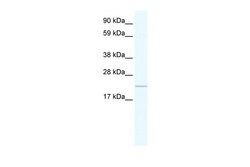
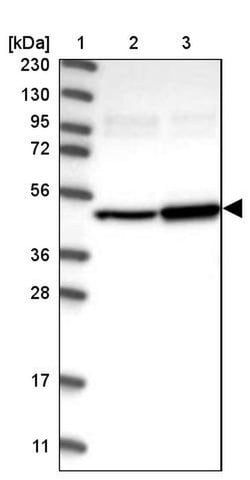
Western Blot
Clone
83B1138
Conjugate
Unconjugated
Gene
Fosb
Gene Alias
activator protein 1; AP-1; DKFZp686C0818; FBJ murine osteosarcoma viral oncogene homolog B; FBJ murine osteosarcoma viral oncogene-like protein B; FBJ osteosarcoma oncogene B; FBJ osteosarcoma viral oncogene isoform deltaFosb-2; fos b; FOSB; FosB proto-oncogene, AP-1 trancription factor subunit; FosB proto-oncogene, AP-1 transcription factor subunit; fra-2; G0/G1 switch regulatory protein 3; G0S3; GOS3; GOSB; LOW QUALITY PROTEIN: protein fosB; MGC42291; oncogene FOS-B; protein fosB; zgc:92354
Host Species
Mouse
Purification Method
Protein G
Regulatory Status
RUO
Gene ID (Entrez)
2354
Content And Storage
Store at 4°C short term. For long term storage, store at -20°C, avoiding freeze/thaw cycles.
Form
Liquid
Related Products

Description
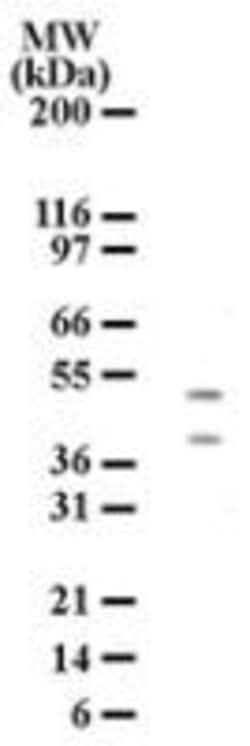
- Suggested positive control: Hela whole cell extract, HeLa cell lysate
- c-FOS is a nuclear phosphoprotein which forms a tight but non-covalently linked complex with the JUN/AP-1 transcription factor
- It has a critical function in regulating the development of cells destined to form and maintain the skeleton, and is thought to have an important role in signal transduction, cell proliferation and differentiation.