14-083-937
CD83 Monoclonal Antibody (HB15e), eBioscience™, Invitrogen™
Manufacturer: Fischer Scientific
Select a Size
| Pack Size | SKU | Availability | Price |
|---|---|---|---|
| Each of 1 | 14-083-937-Each-of-1 | In Stock | ₹ 1,22,108.00 |
14-083-937 - Each of 1
In Stock
Quantity
1
Base Price: ₹ 1,22,108.00
GST (18%): ₹ 21,979.44
Total Price: ₹ 1,44,087.44
Antigen
CD83
Classification
Monoclonal
Concentration
0.5 mg/mL
Formulation
PBS with 0.09% sodium azide; pH 7.2
Gene Accession No.
Q01151
Gene Symbols
CD83
Purification Method
Affinity chromatography
Regulatory Status
RUO
Gene ID (Entrez)
9308
Content And Storage
4° C
Form
Liquid
Applications
Flow Cytometry
Clone
HB15e
Conjugate
Unconjugated
Gene
CD83
Gene Alias
B-cell activation protein; BL11; CD antigen CD83; CD83; CD83 antigen; CD83 antigen (activated B lymphocytes, immunoglobulin superfamily); CD83 molecule; cell surface protein HB15; cell-surface glycoprotein; HB15; hCD83; mCD83
Host Species
Mouse
Quantity
2 mg
Primary or Secondary
Primary
Target Species
Human
Product Type
Antibody
Isotype
IgG1 κ
Related Products

Description
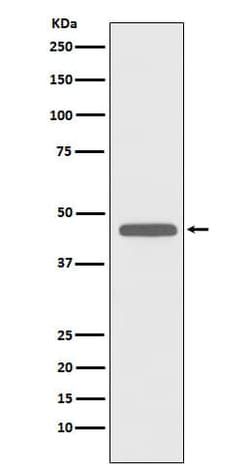
- Description: The HB15e monoclonal antibody reacts with human CD83, a 45 kDa transmembrane glycoprotein
- CD83, a member of the Ig superfamily, is expressed on cultured dendritic cells, interdigitating, follicular, and circulating dendritic cells as well as some proliferating lymphocytes, and human cell lines express this antigen
- While the function of CD83 is unclear, it can serve as a useful marker for mature human blood dendritic cells
- Applications Reported: The HB15e antibody has been reported for use in flow cytometric analysis
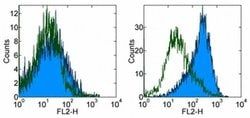
- Applications Tested: The HB15e antibody has been tested by flow cytometric analysis of human peripheral blood-derived dendritic cells
- This can be used at less than or equal to 1 μg per test
- A test is defined as the amount (μg) of antibody that will stain a cell sample in a final volume of 100 μL
- Cell number should be determined empirically but can range from 10^5 to 10^8 cells/test
- It is recommended that the antibody be carefully titrated for optimal performance in the assay of interest
- Purity: Greater than 90%, as determined by SDS-PAGE
- Aggregation: Less than 10%, as determined by HPLC
- Filtration: 0.2 μm post-manufacturing filtered
- CD83 cell surface antigen is a 40-45kD glycoprotein expressed by peripheral blood dendritic cells
- Peripheral lymphocytes can be induced to express very low levels of CD83 after culture in agents such as Con A or PHA
- In immunohistology, CD83 is shown to be expressed strongly by interfollicular interdigitating reticulum cells and more weakly by cells within germinal centres
- CD83 is also expressed by Langerhan's cells in the skin
- The CD83 antigen is a 186-amino-acid single-chain glycoprotein and this molecule is a member of the immunoglobulin superfamily that is composed of an extracellular V-type Ig-like single domain, a transmembrane region, and a short, 40-amino-acid cytoplasmic tail
- CD83 antigen undergoes extensive post-translational glycosylation, since the determined Mr is twice the predicted size of the core protein
- However, CD83+ cells have a unique cell surface immuno-phenotype that does not correlate with that of T cells, B cells, NK cells, or cells of the myelomonocytic lineage
- CD83+ cells coexpress the highest levels of MHC class II molecules, when compared with other leucocyte lineages
- They also co-express T cell markers (CD2, CD5), B cell markers (CD40, CD78), myeloid cell markers (CD13, CD33, CD36), cytokine receptors as well as other cell surface molecules
- Diseases associated with CD83 dysfunction include plague and Rift Valley Fever.