16-549-1050
TSLP Monoclonal Antibody (eBio28F12 (28F12)), Functional Grade, eBioscience™, Invitrogen™
Manufacturer: Invitrogen
Select a Size
| Pack Size | SKU | Availability | Price |
|---|---|---|---|
| Each of 1 | 16-549-1050-Each-of-1 | In Stock | ₹ 12,85,160.00 |
16-549-1050 - Each of 1
In Stock
Quantity
1
Base Price: ₹ 12,85,160.00
GST (18%): ₹ 2,31,328.80
Total Price: ₹ 15,16,488.80
Antigen
TSLP
Classification
Monoclonal
Concentration
1 mg/mL
Formulation
PBS with no preservative; pH 7.2
Gene Accession No.
Q9JIE6
Gene Symbols
TSLP
Purification Method
Affinity chromatography
Regulatory Status
RUO
Gene ID (Entrez)
53603
Content And Storage
4° C
Form
Liquid
Applications
Functional Assay, Neutralization
Clone
eBio28F12 (28F12)
Conjugate
Functional Grade
Gene
TSLP
Gene Alias
Thymic stroma-derived lymphopoietin; thymic stromal lymphopoietin; TSLP
Host Species
Rat
Quantity
50 mg
Primary or Secondary
Primary
Target Species
Mouse
Product Type
Antibody
Isotype
IgG2a κ
Related Products



Description
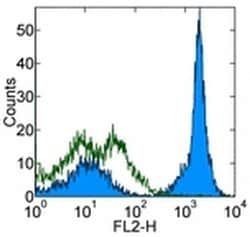
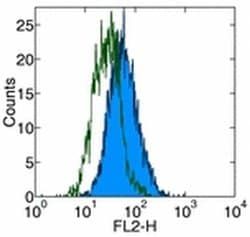
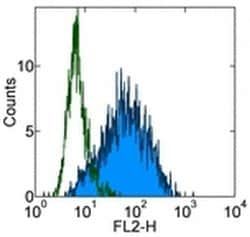
- The BMA12 monoclonal antibody reacts with mouse CD100, also known as Sema4D
- Sema4D/CD100 is a 150kDa transmembrane protein expressed constitutively on T cells and is involved in the activation of B cells through its interaction with CD72
- Interaction of these two proteins diminishes the negative signaling normally effected by CD72
- CD100 is already expressed strongly on resting T cells and somewhat weakly on B cells, but activation upregulates expression on both cell types
- Antigen expression has been reported in Spleen, thymus and l TSLP is a 159 amino acid four helix-bundle hemopoietic cytokine that signals through a heterodimeric receptor complex consisting of the human TSLP receptor and the IL-7R alpha-chain
- It impacts myeloid cells and induces the release of T cell-attracting chemokines from monocytes, enhances the maturation of CD11c (+) dendritic cells, naive CD4 (+), and CD8 (+) T cells into proallergic effectors, and primes dendritic cells to produce large amounts of IL-12 after CD40 ligand stimulation
- TSLP influences the regulation of the positive selection of regulatory T cells and maintenance of peripheral CD4 (+) T cell homeostasis
- It induces allergic inflammation by directly activating mast cells and may be involved in the pathophysiology of inflammatory arthritis
- It is expressed in heart, liver and prostate.