ACVR2A Monoclonal Antibody (C1), Invitrogen™
Mouse Monoclonal Antibody
Manufacturer: Fischer Scientific
The price for this product is unavailable. Please request a quote
Antigen
ACVR2A
Concentration
1 mg/mL
Classification
Monoclonal
Form
Liquid
Regulatory Status
RUO
Formulation
PBS with 50% glycerol and 0.05% Proclin 300, pH 7.4
Gene Alias
activin A receptor type 2A, activin A receptor type IIA, activin A receptor, type IIA, activin receptor IIA, activin receptor type IIA, Activin receptor type-2A, Actrii, ActrIIa, ACTR-IIA, ACVR2, Acvr2a, rActR-II, TactrII, type II activin receptor
Gene Symbols
ACVR2A
Isotype
IgG2b κ
Purification Method
Protein A/G
Gene
ACVR2A
Clone
C1
Applications
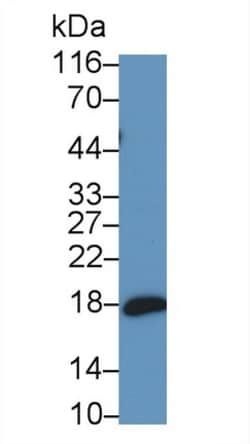
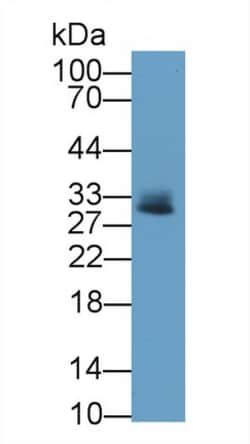
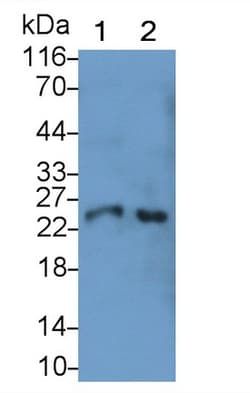
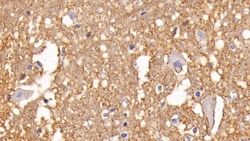
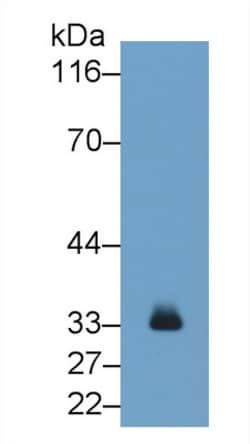
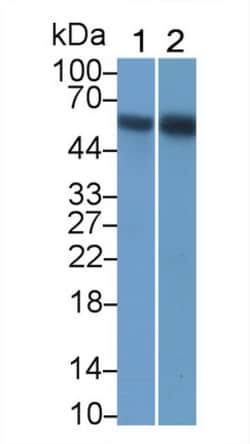
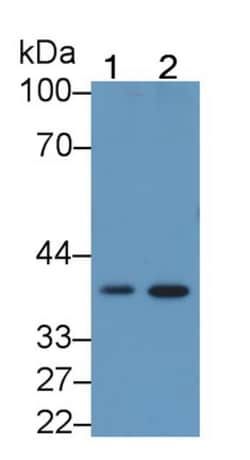
Immunocytochemistry, Immunohistochemistry (Paraffin), Western Blot
Conjugate
Unconjugated
Host Species
Mouse
Target Species
Human, Porcine
Gene Accession No.
P27037
Gene ID (Entrez)
397282, 92
Immunogen
Recombinant Human ACVR2A protein, Ala20-Pro135 (Accession #P27037)
Primary or Secondary
Primary
Content And Storage
Store at 4°C short term. For long term storage, store at -20°C, avoiding freeze/thaw cycles.
Related Products
Description
- Activin A receptor kinase (ACVR2A) is a type II member of the TGF-beta family of receptor Serine/Threonine kinases
- ACVR2A is involved in the activin and myostatin signaling pathway
- (ACVR2A Aliases: ACVR2, ACTRII)
- These receptors are all transmembrane proteins, composed of a ligand-binding extracellular domain with cysteine-rich region, a transmembrane domain, and a cytoplasmic domain with predicted serine/threonine specificity
- Type I receptors are essential for signaling, and type II receptors are required for binding ligands and for expression of type I receptors
- Type I and II receptors form a stable complex after ligand binding, resulting in phosphorylation of type I receptors by type II receptors
- Type II receptors are considered to be constitutively active kinases.