RIP3 Monoclonal Antibody (C1), Invitrogen™
Mouse Monoclonal Antibody
Manufacturer: Fischer Scientific
The price for this product is unavailable. Please request a quote
Antigen
RIP3
Concentration
1 mg/mL
Classification
Monoclonal
Form
Liquid
Regulatory Status
RUO
Formulation
PBS with 50% glycerol and 0.05% Proclin 300, pH 7.4
Gene Alias
2610528K09Rik, AW107945, Hcyp2, Homocysteine respondent protein HCYP2, mRIP3, receptor interacting protein 3, receptor interacting serine/threonine kinase 3, receptor-interacting protein 3, receptor-interacting serine/threonine-protein kinase 3, receptor-interacting serine-threonine kinase 3, Rip3, RIP-3, Ripk3, RIP-like protein kinase 3
Gene Symbols
RIPK3
Isotype
IgG2b κ
Purification Method
Protein A/G
Gene
RIPK3
Clone
C1
Applications
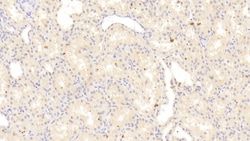
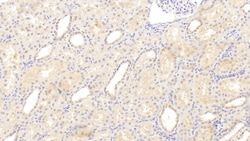
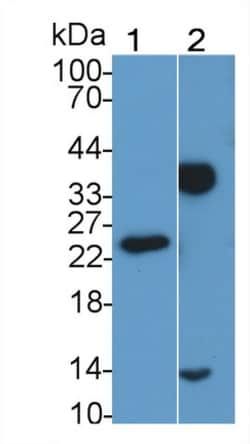
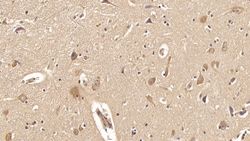
Immunocytochemistry, Immunohistochemistry (Paraffin), Western Blot
Conjugate
Unconjugated
Host Species
Mouse
Target Species
Human, Rat
Gene Accession No.
Q9Y572, Q9Z2P5
Gene ID (Entrez)
11035, 246240
Immunogen
Recombinant Rat RIPK3 protein, Val50-Pro272 (Accession #Q9Z2P5)
Primary or Secondary
Primary
Content And Storage
Store at 4°C short term. For long term storage, store at -20°C, avoiding freeze/thaw cycles.
Related Products
Description
- RIPK3 is a member of the receptor-interacting protein (RIP) family of serine/threonine protein kinases, which contains a C-terminal domain unique from other RIP family members
- RIPK3 is predominantly localized to the cytoplasm, and specifically, are colocalized in the mitochondrion which can undergo nucleocytoplasmic shuttling dependent on novel nuclear localization and export signals
- RIPK3 is a component of the tumor necrosis factor (TNF) receptor-I signaling complex, and can induce apoptosis and weakly activate the NF-kappaB transcription factor and caspase-8 prevents RIPK3-dependent necrosis without inducing apoptosis by functioning in a proteolytically active complex with CFLAR and that this complex is required for the protective function.