200020111
HRG Monoclonal Antibody (C4), Invitrogen™
Mouse Monoclonal Antibody
Manufacturer: Fischer Scientific
The price for this product is unavailable. Please request a quote
Antigen
HRG
Concentration
1 mg/mL
Classification
Monoclonal
Form
Liquid
Regulatory Status
RUO
Formulation
PBS with 50% glycerol and 0.05% Proclin 300, pH 7.4
Gene Alias
AI265597, AW413091, D16jh2, D18020, DKFZp779H1622, histidine rich glycoprotein, histidine-proline-rich glycoprotein, Histidine-rich glycoprotein, histidine-rich glycoprotein 1, HPRG, HRG, HRG1, Hrgp, THPH11
Gene Symbols
HRG
Isotype
IgG2b κ
Purification Method
Protein A/G
Gene
HRG
Clone
C4
Applications
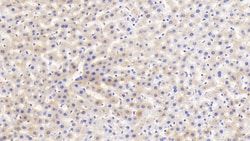
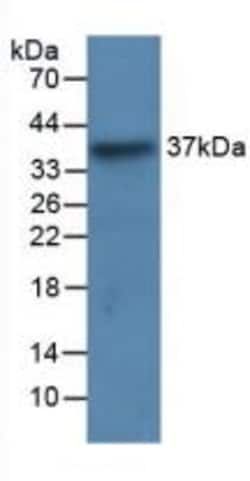
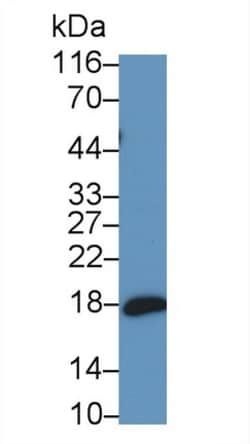
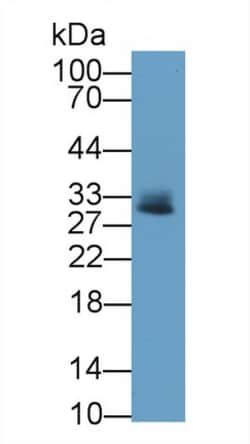
Immunocytochemistry, Immunohistochemistry (Paraffin), Western Blot
Conjugate
Unconjugated
Host Species
Mouse
Target Species
Rat
Gene Accession No.
Q99PS8
Gene ID (Entrez)
171016
Immunogen
Recombinant Eukaryotic Rat HRG protein, Leu19-Lys525 (Accession #Q99PS8)
Primary or Secondary
Primary
Content And Storage
Store at 4°C short term. For long term storage, store at -20°C, avoiding freeze/thaw cycles.
Related Products
Description
- HRG contains two cystatin-like domains and is located in plasma and platelets
- The physiological function has not been determined but it is known that the protein binds heme, dyes and divalent metal ions
- It can inhibit rosette formation and interacts with heparin, thrombospondin and plasminogen
- Two of the protein's effects, the inhibition of fibrinolysis and the reduction of inhibition of coagulation, indicate a potential prothrombotic effect
- Mutations in this gene lead to thrombophilia due to abnormal histidine-rich glycoprotein levels.