200020165
Carbonic Anhydrase IV Polyclonal Antibody, Invitrogen™
Rabbit Polyclonal Antibody
Manufacturer: Fischer Scientific
The price for this product is unavailable. Please request a quote
Antigen
Carbonic Anhydrase IV
Applications
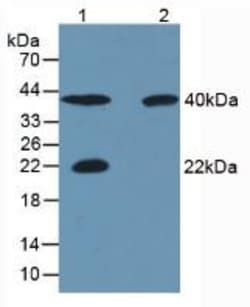
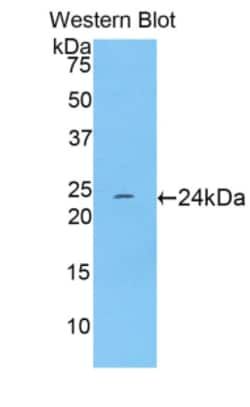
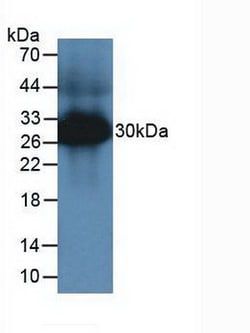
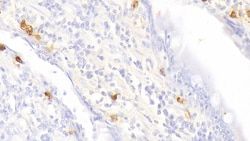
Immunocytochemistry, Immunohistochemistry (Paraffin), Western Blot
Conjugate
Unconjugated
Host Species
Rabbit
Target Species
Human, Mouse, Porcine, Rat
Gene Accession No.
P22748, P48284, Q64444
Gene ID (Entrez)
100511956, 12351, 29242, 762
Immunogen
Recombinant Rat CA4 protein, Ser20-Ser220 (Accession #P48284)
Primary or Secondary
Primary
Content And Storage
Store at 4°C short term. For long term storage, store at -20°C, avoiding freeze/thaw cycles.
Concentration
0.5 mg/mL
Classification
Polyclonal
Form
Liquid
Regulatory Status
RUO
Formulation
PBS with 50% glycerol and 0.05% Proclin 300, pH 7.4
Gene Alias
AW456718, CA IV, CA4, CAIV, CA-IV, Car4, Carbonate dehydratase IV, carbonic anhydrase 4, Carbonic anhydrase IV, carbonic dehydratase IV, RP17
Gene Symbols
CA4, Car4
Isotype
IgG
Purification Method
Affinity chromatography
Gene
CA4
Related Products
Description
- Carbonic anhydrases are a large family of zinc metalloenzymes that catalyze the reversible hydration of carbon dioxide
- They participate in a variety of biological processes, including respiration, calcification, acid-base balance, bone resorption, and the formation of aqueous humor, cerebrospinal fluid, saliva, and gastric acid
- They show extensive diversity in tissue distribution and in their subcellular localization
- This gene encodes a glycosylphosphatidyl-inositol-anchored membrane isozyme expressed on the luminal surfaces of pulmonary capillaries and proximal renal tubules
- Its exact function is not known, however, it may have a role in inherited renal abnormalities of bicarbonate transport.