RIP1 Monoclonal Antibody (C4), Invitrogen™
Mouse Monoclonal Antibody
Manufacturer: Fischer Scientific
The price for this product is unavailable. Please request a quote
Antigen
RIP1
Concentration
1 mg/mL
Classification
Monoclonal
Form
Liquid
Regulatory Status
RUO
Formulation
PBS with 50% glycerol and 0.05% Proclin 300, pH 7.4
Gene Alias
cell death protein RIP, D330015H01Rik, FLJ39204, OTTHUMP00000015955, receptor (TNFRSF)-interacting serine-threonine kinase 1, receptor interacting serine/threonine kinase 1, receptor-interacting protein 1, receptor-interacting protein kinase 1, receptor-interacting serine/threonine-protein kinase 1, Rinp, RIP, RIP1, RIP-1, RIP1 (CT), RIPK1, serine/threonine-protein kinase RIP
Gene Symbols
RIPK1
Isotype
IgG2b κ
Purification Method
Protein A/G
Gene
RIPK1
Clone
C4
Applications
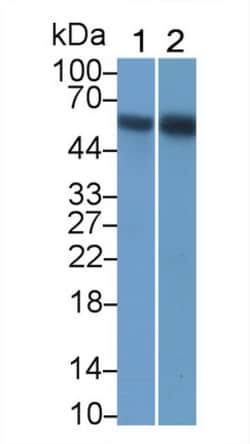
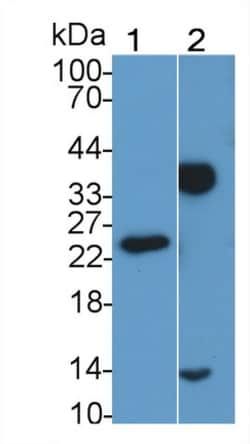
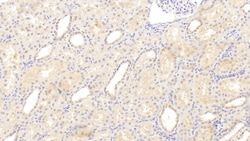
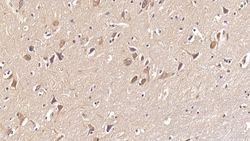
Immunocytochemistry, Immunohistochemistry (Paraffin), Western Blot
Conjugate
Unconjugated
Host Species
Mouse
Target Species
Human, Porcine
Gene Accession No.
Q13546
Gene ID (Entrez)
100524751, 8737
Immunogen
Recombinant Human RIPK1 protein, Phe17-Tyr289 (Accession #Q13546)
Primary or Secondary
Primary
Content And Storage
Store at 4°C short term. For long term storage, store at -20°C, avoiding freeze/thaw cycles.
Related Products
Description
- Serine-threonine kinase which transduces inflammatory and cell-death signals (programmed necrosis) following death receptors ligation, activation of pathogen recognition receptors (PRRs), and DNA damage
- Upon activation of TNFR1 by the TNF-alpha family cytokines, TRADD and TRAF2 are recruited to the receptor
- Phosphorylates DAB2IP at 'Ser-728' in a TNF-alpha-dependent manner, and thereby activates the MAP3K5-JNK apoptotic cascade
- Ubiquitination by TRAF2 via 'Lys-63'-link chains acts as a critical enhancer of communication with downstream signal transducers in the mitogen-activated protein kinase pathway and the NF-kappa-B pathway, which in turn mediate downstream events including the activation of genes encoding inflammatory molecules
- Polyubiquitinated protein binds to IKBKG/NEMO, the regulatory subunit of the IKK complex, a critical event for NF-kappa-B activation
- Interaction with other cellular RHIM-containing adapters initiates gene activation and cell death
- RIPK1 and RIPK3 association, in particular, forms a necrosis-inducing complex.