ACSM1 Polyclonal Antibody, Invitrogen™
Rabbit Polyclonal Antibody
Manufacturer: Fischer Scientific
The price for this product is unavailable. Please request a quote
Antigen
ACSM1
Applications
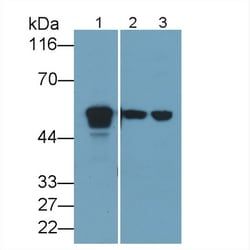
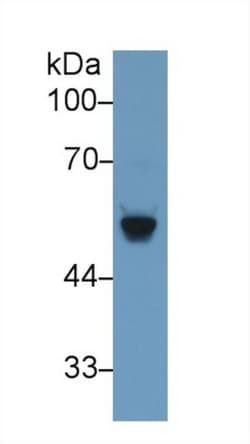
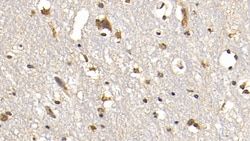
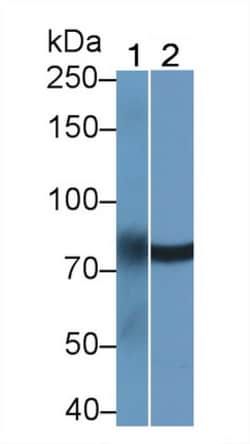
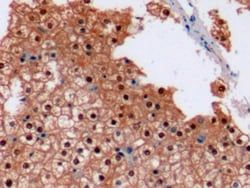
Immunocytochemistry, Immunohistochemistry (Paraffin), Western Blot
Conjugate
Unconjugated
Host Species
Rabbit
Target Species
Human, Mouse, Porcine, Rat
Gene Accession No.
Q08AH1, Q91VA0
Gene ID (Entrez)
116285, 117147, 361638
Immunogen
Recombinant Human ACSM1 protein, Ser370-Pro557 (Accession #Q08AH1)
Primary or Secondary
Primary
Content And Storage
Store at 4°C short term. For long term storage, store at -20°C, avoiding freeze/thaw cycles.
Concentration
0.5 mg/mL
Classification
Polyclonal
Form
Liquid
Regulatory Status
RUO
Formulation
PBS with 50% glycerol and 0.05% Proclin 300, pH 7.4
Gene Alias
ACSM1, Acyl-CoA synthetase medium-chain family member 1, acyl-coenzyme A synthetase ACSM1, mitochondrial, Benzoate--CoA ligase, BUCS1, Butyrate CoA ligase, butyrate--CoA ligase 1, butyryl Coenzyme A synthetase 1, butyryl-coenzyme A synthetase 1, LAE, Lipoate-activating enzyme, MACS1, medium-chain acyl-CoA synthetase, middle-chain acyl-CoA synthetase 1, Xenobiotic/medium-chain fatty acid-CoA ligase HXM-B
Gene Symbols
ACSM1
Isotype
IgG
Purification Method
Protein A
Gene
ACSM1
Related Products
Description
- ACSM1 has medium-chain fatty acid:CoA ligase activity with broad substrate specificity (in vitro)
- This protein acts on acids from C(4) to C(11) and on the corresponding 3-hydroxy-and 2,3-or 3,4-unsaturated acids (in vitro)
- This protein functions as GTP-dependent lipoate-activating enzyme that generates the substrate for lipoyltransferase.