3851580
RONα Mouse, Unlabeled, Clone: 29, BD
Mouse Monoclonal Antibody
Manufacturer: Fischer Scientific
The price for this product is unavailable. Please request a quote
Antigen
RONα
Concentration
250μg/mL
Conjugate
Unconjugated
Regulatory Status
RUO
Target Species
Canine, Frog, Human, Mouse, Rat
Isotype
IgG2b
Purification Method
Affinity Purified
Clone
29
Classification
Monoclonal
Host Species
Mouse
Research Discipline
Cell Biology
Immunogen
Human RONα aa. 40-224
Primary or Secondary
Primary
Related Products


Description
- RON (Recepteur d′ Origine Nantaise) is a tyrosine kinase receptor for MSP (Macrophage Stimulating Protein) that belongs to the hepatocyte growth factor receptor family
- RON is synthesized as a single chain glycosylated polypeptide of 1400 amino acids that is cleaved upon maturation into a 150kDa β-subunit with the kinase activity and a 40kDa α-chain
- Both chains are linked by disulfide bonds and the proper arrangement of the α and β heterodimer is necessary for biological activity of RON
- MSP induces the tyrosine kinase activity of RON, triggering a cascade of intracellular signaling that leads to DNA synthesis
- However, RON activation in mouse erythroleukemia cells results in apoptosis
- The replacement of autophosphorylation sites Y1330 and Y1337 abolishes both the mitogenic and apoptotic effects of MSP
- Therefore, autophosphorylation at Y1330 and Y1337 is required for RON's biological activity
- PLCγ, Shc, Grb2, p61, and p65 associate with RON
- Although widely expressed, RON is particularly abundant in epithelial tissues, lung, brain, adrenal glands, gastrointestinal tract, kidney and testis
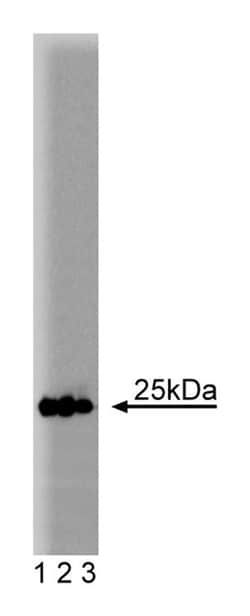
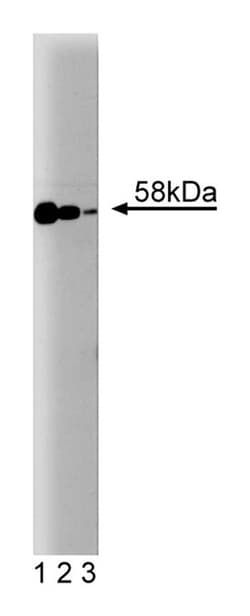
- Immunofluorescence, Immunoprecipitation, Western Blotting