50-112-2642
CD33 Monoclonal Antibody (WM-53 (WM53)), eBioscience™, Invitrogen™
Manufacturer: Invitrogen
Select a Size
| Pack Size | SKU | Availability | Price |
|---|---|---|---|
| Each of 1 | 50-112-2642-Each-of-1 | In Stock | ₹ 12,460.00 |
50-112-2642 - Each of 1
In Stock
Quantity
1
Base Price: ₹ 12,460.00
GST (18%): ₹ 2,242.80
Total Price: ₹ 14,702.80
Antigen
CD33
Classification
Monoclonal
Concentration
0.5 mg/mL
Formulation
PBS with 0.09% sodium azide; pH 7.2
Gene Accession No.
P20138
Gene Symbols
CD33
Purification Method
Affinity chromatography
Regulatory Status
RUO
Gene ID (Entrez)
945
Content And Storage
4° C
Form
Liquid
Applications
Flow Cytometry, Immunocytochemistry, Immunoprecipitation
Clone
WM-53 (WM53)
Conjugate
Unconjugated
Gene
CD33
Gene Alias
CD33; CD33 antigen; CD33 antigen (gp67); CD33 molecule; CD33 molecule transcript; FLJ00391; gp67; Myeloid cell surface antigen CD33; p67; sialic acid binding Ig-like lectin 3; sialic acid-binding Ig-like lectin 3; SIGLEC3; Siglec-3
Host Species
Mouse
Quantity
100 μg
Primary or Secondary
Primary
Target Species
Human
Product Type
Antibody
Isotype
IgG1 κ
Related Products




Description
- Description: The WM-53 monoclonal antibody reacts with human CD33, also known as GP67 and P67, a 67 kDa type I transmembrane glycoprotein that is a member of the Siglec (sialic acid-binding Ig superfamily lectin) family
- It is highly specific to the hematopoietic compartment and is expressed on monocytes, activated T cells, granulocytes, myeloid progenitors, and mast cells
- Applications Reported: The WM-53 (WM53) antibody has been reported for use in flow cytometric analysis, immunoprecipitation, and immunocytochemistry staining
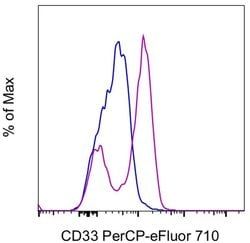
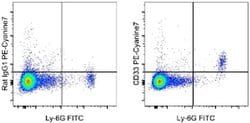
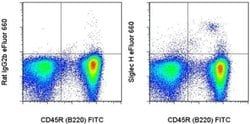
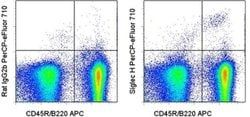
- Applications Tested: The WM-53 (WM53) antibody has been tested by flow cytometric analysis of lysed whole blood
- This can be used at less than or equal to 1 μg per test
- A test is defined as the amount (μg) of antibody that will stain a cell sample in a final volume of 100 μL
- Cell number should be determined empirically but can range from 10^5 to 10^8 cells/test
- It is recommended that the antibody be carefully titrated for optimal performance in the assay of interest
- Purity: Greater than 90%, as determined by SDS-PAGE
- Aggregation: Less than 10%, as determined by HPLC
- Filtration: 0.2 μm post-manufacturing filtered
- CD33 is a transmembrane protein of the sialic acid-binding immunoglobulin-like lectin (Siglec) family
- It belongs to the immunoreceptor tyrosine-based inhibitory motif (ITIM)-containing molecules able of recruiting protein tyrosine phosphatases SHP-1 and SHP-2 to signal assemblies, and these ITIMs are also used for ubiquitin-mediated removal of the receptor from the cell surface
- CD33 is expressed on cells of myelomonocytic lineage, binds sialic acid residues in N- and O-glycans on cell surfaces, and is a therapeutic target for acute myeloid leukemia
- Further, CD33 is found on granulocyte and macrophage precursors in the bone marrow, but is not on pluripotent stem cells
- CD33 is also expressed on, and is a useful marker for, peripheral monocytes
- CD33 is useful for distinguishing myelogenous leukemia cells from lymphoid or erythroid leukemias
- Diseases associated with CD43 dysfunction include gallbladder lymphoma and extracutaneous mastocytoma.