50-112-2886
Cutaneous Lymphocyte Antigen (CLA) Monoclonal Antibody (HECA-452), eBioscience™, Invitrogen™
Manufacturer: Invitrogen
Select a Size
| Pack Size | SKU | Availability | Price |
|---|---|---|---|
| Each of 1 | 50-112-2886-Each-of-1 | In Stock | ₹ 13,172.00 |
50-112-2886 - Each of 1
In Stock
Quantity
1
Base Price: ₹ 13,172.00
GST (18%): ₹ 2,370.96
Total Price: ₹ 15,542.96
Antigen
Cutaneous Lymphocyte Antigen (CLA)
Classification
Monoclonal
Concentration
0.5 mg/mL
Formulation
PBS with 0.09% sodium azide; pH 7.2
Host Species
Rat
Quantity
100 μg
Primary or Secondary
Primary
Content And Storage
4° C
Form
Liquid
Applications
Flow Cytometry, Functional Assay, Immunohistochemistry (Paraffin), Western Blot
Clone
HECA-452
Conjugate
Unconjugated
Gene Alias
CLA
Purification Method
Affinity chromatography
Regulatory Status
RUO
Target Species
Human
Product Type
Antibody
Isotype
IgM κ
Related Products


Description
- Description: This HECA-452 monoclonal antibody reacts with human Cutaneous Lymphocyte Antigen (CLA)
- This cell surface glycoprotein is most highly expressed on T cells in the skin
- Nevertheless, CLA can also be detected on some peripheral T and NK cells, as well as monocytes, neutrophils and CD1a+ dendritic cells
- Studies have determined that this antibody recognizes sialofucosylated glycans and sialyl Lewis x (sLex)
- CLA, which binds E-selectin and endothelial cell-leukocyte adhesion molecule 1 (ELAM-1), is involved in T lymphocyte infiltration and adhesion at cutaneous sites of inflammation
- The HECA-452 antibody has been reported to inhibit sLex binding to E-selectin; however, this property is still under debate in the literature
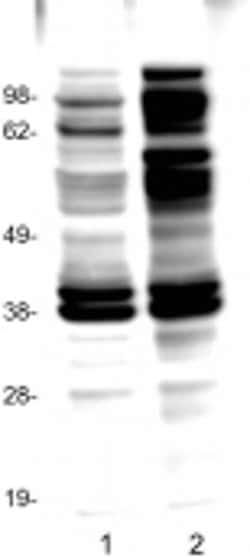
- Applications Reported: This HECA-452 antibody has been reported for use in flow cytometric analysis, western blotting, functional assays, and immunohistochemical staining of formalin-fixed paraffin embedded tissue sections
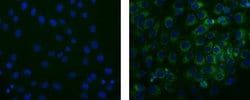
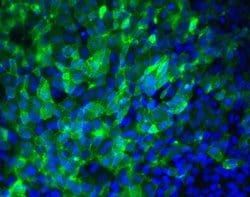
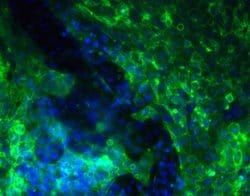
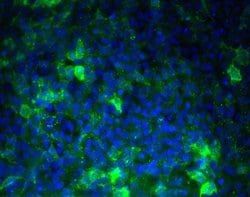
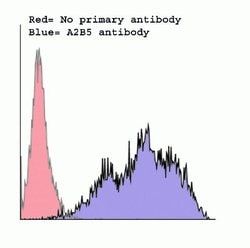
- Applications Tested: This HECA-452 antibody has been tested by flow cytometric analysis on human PBMCs and by immunohistochemistry on FFPE human tissue
- The HECA-452 antibody can be used at less than or equal to 0.125 μg/test for flow cytometry and at less than or equal to 10 μg/mL
- The antibody performs optimally with low pH antigen retrieval but high pH antigen retrieval can also be used
- It is recommended that the antibody be carefully titrated for optimal performance in the assay of interest
- This cell surface glycoprotein is most highly expressed on T cells in the skin
- Nevertheless, CLA can also be detected on some peripheral T and NK cells, as well as monocytes, neutrophils and CD1a+ dendritic cells
- Studies have determined that this antibody recognizes sialofucosylated glycans and sialyl Lewis x (sLex)
- CLA, which binds E-selectin and endothelial cell-leukocyte adhesion molecule 1 (ELAM-1), is involved in T lymphocyte infiltration and adhesion at cutaneous sites of inflammation.