50-157-1563
REST Polyclonal Antibody, Bethyl Laboratories
Manufacturer: Fischer Scientific
Select a Size
| Pack Size | SKU | Availability | Price |
|---|---|---|---|
| Each of 1 | 50-157-1563-Each-of-1 | In Stock | ₹ 46,161.63 |
50-157-1563 - Each of 1
In Stock
Quantity
1
Base Price: ₹ 46,161.63
GST (18%): ₹ 8,309.093
Total Price: ₹ 54,470.723
Antigen
REST
Classification
Polyclonal
Formulation
TBS with 0.1% BSA and 0.09% sodium azide
Gene Accession No.
Q13127
Gene Symbols
REST
Immunogen
Between 1050 and C-term
Quantity
100 μL
Primary or Secondary
Primary
Target Species
Human
Product Type
Antibody
Isotype
IgG
Applications
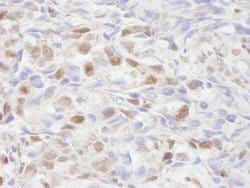
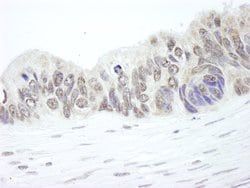
Immunohistochemistry
Conjugate
Unconjugated
Gene
REST
Gene Alias
NRSF, XBR, X2 box repressor; neural-restrictive silencer factor; neuron restrictive silencer factor; repressor binding to the X2 box
Host Species
Rabbit
Purification Method
Antigen affinity chromatography
Regulatory Status
RUO
Gene ID (Entrez)
5978
Content And Storage
4° C
Form
Liquid
Related Products
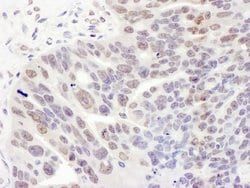
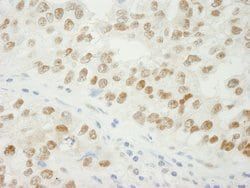
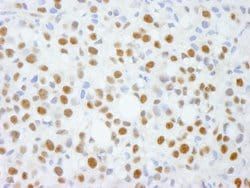

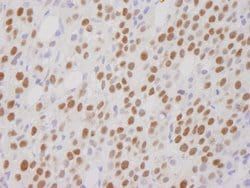
Description
- The recommended shelf life for this product is 1 year from date of receipt
- Based on 100% sequence identity, this antibody is predicted to react with Orangutan, Monkey, Gorilla, Chimpanzee, Northern white-cheeked gibbon, Crab-eating macaque and Wh Transcriptional repressor which binds neuron-restrictive silencer element (NRSE) and represses neuronal gene transcription in non-neuronal cells
- Restricts the expression of neuronal genes by associating with two distinct corepressors, mSin3 and CoREST, which in turn recruit histone deacetylase to the promoters of REST-regulated genes
- Mediates repression by recruiting the BHC complex at RE1/NRSE sites which acts by deacetylating and demethylating specific sites on histones, thereby acting as a chromatin modifier.