50-167-5612
TSC22D1 Mouse anti-Human, Clone: OTI4H8, liquid, TrueMAB™
Manufacturer: OriGene
Select a Size
| Pack Size | SKU | Availability | Price |
|---|---|---|---|
| Each of 1 | 50-167-5612-Each-of-1 | In Stock | ₹ 44,954.79 |
50-167-5612 - Each of 1
In Stock
Quantity
1
Base Price: ₹ 44,954.79
GST (18%): ₹ 8,091.862
Total Price: ₹ 53,046.652
Antigen
TSC22D1
Classification
Monoclonal
Concentration
1 mg/mL
Formulation
PBS with 1% BSA, 50% glycerol and 0.02% sodium azide
Gene Accession No.
Q15714
Gene Symbols
TSC22D1
Immunogen
Full length human recombit protein of human TSC22D1 produced in HEK293T cell.
Quantity
100 μL
Primary or Secondary
Primary
Target Species
Human
Product Type
Antibody
Isotype
IgG2a
Applications
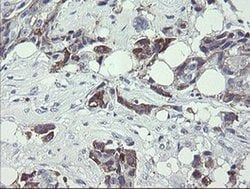
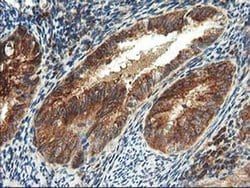
Flow Cytometry, Immunohistochemistry (Paraffin), Western Blot
Clone
OTI4H8
Conjugate
Unconjugated
Gene
TSC22D1
Gene Alias
Ptg-2, TGFB1I4, TSC22
Host Species
Mouse
Purification Method
Affinity Chromatography
Regulatory Status
RUO
Gene ID (Entrez)
8848
Content And Storage
-20° C, Avoid Freeze/Thaw Cycles
Form
Liquid
Related Products




Description
- TSC22 domain family protein, or TSC22, is a transcription factor that belongs to the large family of early response genes
- This transcriptional repressor is known to act on the C-type natriuretic peptide (CNP) promoter
- TSC22 belongs to the TSC-22/Dip/Bun family and is an intracellular protein that may be found in the cytoplasm or nucleus
- This transcription factor is known to regulate cell growth, differentiation and cell death and is involved in modulating the transcriptional activity of Smad3 and Smad4
- This protein is ubiquitously expressed in most tissues and widely in both fetal and adult tissues
- It is generally expressed in aortic endothelial cells, and induced by cytokines, including TGFB
- These proteins may be possible therapeutic targets of leukemia and prostate cancer.