50-173-6608
TPSAB1 Mouse anti-Human, Clone: 6A10G1, Proteintech
Manufacturer: Proteintech Group Inc
Select a Size
| Pack Size | SKU | Availability | Price |
|---|---|---|---|
| Each of 1 | 50-173-6608-Each-of-1 | In Stock | ₹ 44,150.23 |
50-173-6608 - Each of 1
In Stock
Quantity
1
Base Price: ₹ 44,150.23
GST (18%): ₹ 7,947.041
Total Price: ₹ 52,097.271
Antigen
TPSAB1
Classification
Monoclonal
Concentration
0.69 mg/mL
Formulation
PBS with 50% glycerol and 0.02% sodium azide; pH 7.3
Gene Accession No.
Q15661
Gene Symbols
TPSAB1
Immunogen
TPSAB1 Fusion Protein Ag4167
Quantity
150 μL
Primary or Secondary
Primary
Target Species
Human
Product Type
Antibody
Isotype
IgG1
Applications
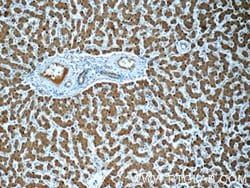
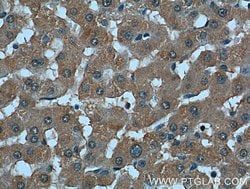
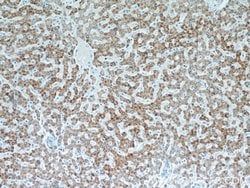
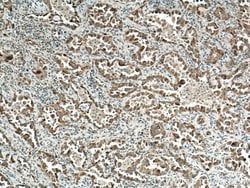
Immunohistochemistry (Paraffin), Western Blot
Clone
6A10G1
Conjugate
Unconjugated
Gene
TPSAB1
Gene Alias
MCP7, TPS1, TPS2, TPSAB1, TPSB1, Tryptase 1, tryptase alpha/beta 1, Tryptase beta 1, Tryptase I
Host Species
Mouse
Purification Method
Protein G
Regulatory Status
RUO
Gene ID (Entrez)
7177
Content And Storage
-20°C
Form
Liquid
Related Products



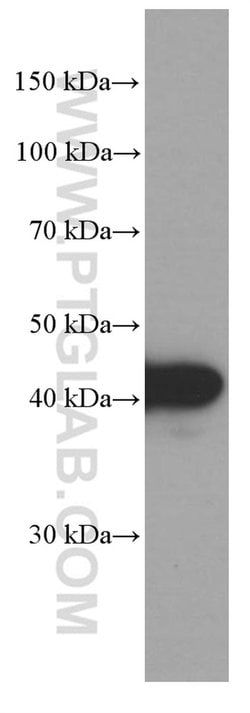
Description
- Tryptases comprise a family of trypsin-like serine proteases, the peptidase family S1
- Tryptases are enzymatically active only as heparin-stabilized tetramers, and they are resistant to all known endogenous proteinase inhibitors
- Several tryptase genes are clustered on chromosome 16p13.3
- These genes are characterized by several distinct features
- They have a highly conserved 3′ UTR and contain tandem repeat sequences at the 5′ flank and 3′ UTR which are thought to play a role in regulation of the mRNA stability
- These genes have an intron immediately upstream of the initiator Met codon, which separates the site of transcription initiation from protein coding sequence
- This feature is characteristic of tryptases but is unusual in other genes
- The alleles of this gene exhibit an unusual amount of sequence variation, such that the alleles were once thought to represent two separate genes, alpha and beta 1
- Beta tryptases appear to be the main isoenzymes expressed in mast cells, whereas in basophils, alpha tryptases predominate
- Tryptases have been implicated as mediators in the pathogenesis of asthma and other allergic and inflammatory disorders.