50-173-7217
VEGFA Mouse anti-Human, Clone: 2E2H9, Proteintech
Manufacturer: Proteintech Group Inc
Select a Size
| Pack Size | SKU | Availability | Price |
|---|---|---|---|
| Each of 1 | 50-173-7217-Each-of-1 | In Stock | ₹ 44,150.23 |
50-173-7217 - Each of 1
In Stock
Quantity
1
Base Price: ₹ 44,150.23
GST (18%): ₹ 7,947.041
Total Price: ₹ 52,097.271
Antigen
VEGFA
Classification
Monoclonal
Concentration
1 mg/mL
Formulation
PBS with 50% glycerol and 0.1% sodium azide; pH 7.3
Gene Accession No.
P15692
Gene Symbols
VEGFA
Immunogen
VEGFA Fusion Protein Ag13500
Quantity
150 μL
Primary or Secondary
Primary
Target Species
Human
Product Type
Antibody
Isotype
IgG2b
Applications
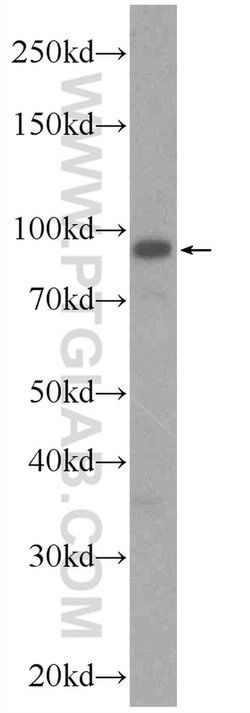
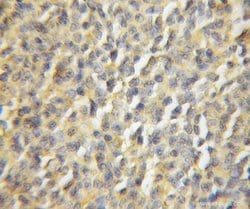
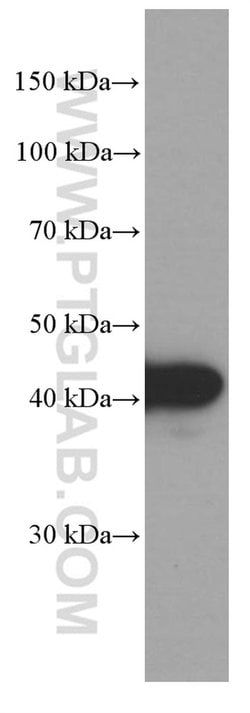
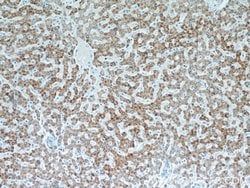
Immunohistochemistry (Paraffin), Western Blot
Clone
2E2H9
Conjugate
Unconjugated
Gene
VEGFA
Gene Alias
L VEGFA, MVCD1, Vascular permeability factor, VEGF, VEGF A, VEGFA, VPF
Host Species
Mouse
Purification Method
Protein G
Regulatory Status
RUO
Gene ID (Entrez)
7422
Content And Storage
-20°C
Form
Liquid
Related Products




Description
- This antibody can recognize all VEGFA isoforms
- VEGF (vascular endothelial growth factor) which is a 45 kDa homodimeric, disulfide-linked glycoprotein involved in angiogenesis which promotes tumor progression and metastasis
- VEGF has a variety of effects on vascular endothelium, including the ability to promote endothelial cell viability, mitogenesis, chemotaxis, and vascular permeability
- The VEGF family currently includes VEGF-A, VEGF-B, VEGF-C, VEGF-D, VEGF-E, and PIGF
- VEGF and its receptor system have been shown to be the fundamental regulators in the cell signaling of angiogenesis
- Most tumors have the absolute requirement of angiogenesis, and VEGF has been described as the most potent angiogenic cytokine linked to this process
- To date 5 different isoforms of VEGF have been described
- These isoforms are generated as the result of alternative splicing from a single VEGF gene
- These various isoforms have been shown to bind to two tyrosine-kinase receptors flt-1 (VEGFR-1) and flk-1/KDR (VEGFR-2), which have been found to be expressed almost exclusively on endothelial cells
- VEGF and its high-affinity binding receptors, the tyrosine kinases FLK1 and FLT1, are thought to be important for the development of embryonic vasculature
- Studies have shown that an alternately spliced form of FLT1 produces a soluble protein, termed sFLT1, which binds vascular endothelial growth factor with high affinity, playing an inhibitory role in angiogenesis
- Elevated levels of VEGF is linked to POEMS syndrome (Polyneuropathy, Organomegaly, Endocrinopathy, Monoclonal gammopathy, Skin changes) also known as Crow-Fukase syndrome which affects multiple organs in the body.