50-173-7042
GSTA1 Mouse anti-Human, Mouse, Porcine, Rat, Clone: 1E1F4, Proteintech
Manufacturer: Proteintech Group Inc
Select a Size
| Pack Size | SKU | Availability | Price |
|---|---|---|---|
| Each of 1 | 50-173-7042-Each-of-1 | In Stock | ₹ 44,150.23 |
50-173-7042 - Each of 1
In Stock
Quantity
1
Base Price: ₹ 44,150.23
GST (18%): ₹ 7,947.041
Total Price: ₹ 52,097.271
Antigen
GSTA1
Classification
Monoclonal
Concentration
1 mg/mL
Formulation
PBS with 50% glycerol and 0.1% sodium azide; pH 7.3
Gene Accession No.
P00502, P08263, P13745, P51781
Gene Symbols
GSTA1
Immunogen
GSTA1 Fusion Protein Ag6084
Quantity
150 μL
Primary or Secondary
Primary
Target Species
Human, Mouse, Porcine, Rat
Product Type
Antibody
Isotype
IgG1
Applications
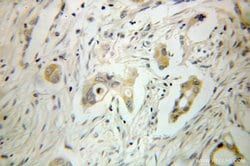
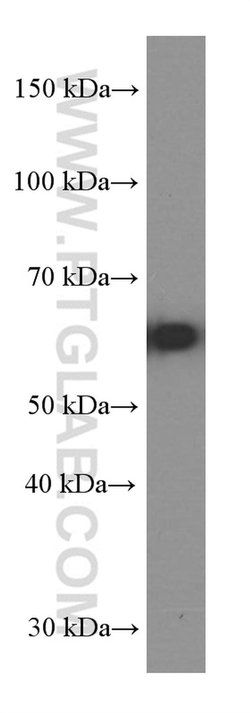
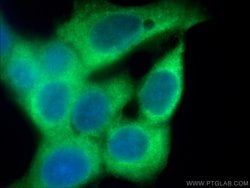
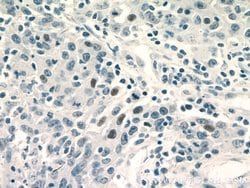
Immunocytochemistry, Immunofluorescence, Immunohistochemistry (Paraffin), Western Blot
Clone
1E1F4
Conjugate
Unconjugated
Gene
GSTA1
Gene Alias
Glutathione S transferase A1, GST class alpha member 1, GST epsilon, GST HA subunit 1, GST2, GSTA1, GSTA1 1, GTH1
Host Species
Mouse
Purification Method
Protein G
Regulatory Status
RUO
Gene ID (Entrez)
14857, 24421, 2938, 397682
Content And Storage
-20°C
Form
Liquid
Related Products



Description
- Cytosolic and membrane-bound forms of glutathione S-transferase are encoded by two distinct supergene families
- These enzymes function in the detoxification of electrophilic compounds, including carcinogens, therapeutic drugs, environmental toxins and products of oxidative stress, by conjugation with glutathione
- The genes encoding these enzymes are known to be highly polymorphic
- These genetic variations can change an individuals susceptibility to carcinogens and toxins as well as affect the toxicity and efficacy of some drugs
- At present, eight distinct classes of the soluble cytoplasmic mammalian glutathione S-transferases have been identified: alpha, kappa, mu, omega, pi, sigma, theta and zeta
- This gene encodes a glutathione S-tranferase belonging to the alpha class
- The alpha class genes, located in a cluster mapped to chromosome 6, are the most abundantly expressed glutathione S-transferases in liver
- In addition to metabolizing bilirubin and certain anti-cancer drugs in the liver, the alpha class of these enzymes exhibit glutathione peroxidase activity thereby protecting the cells from reactive oxygen species and the products of peroxidation.