CD146 Monoclonal Antibody (P1H12), FITC, eBioscience™, Invitrogen™
Mouse Monoclonal Antibody
Manufacturer: Fischer Scientific
The price for this product is unavailable. Please request a quote
Antigen
CD146
Concentration
5 μL/Test
Classification
Monoclonal
Form
Liquid
Regulatory Status
RUO
Formulation
PBS with 0.2% BSA and 0.09% sodium azide; pH 7.2
Gene Alias
1-gicerin; AV025631; CD146; CD149; Cell surface glycoprotein MUC18; cell surface glycoprotein P1H12; Gicerin; HEMCAM; l-gicerin; l-gicerin precursor; l-gicerin protein; LOW QUALITY PROTEIN: cell surface glycoprotein MUC18; MCAM; melanoma adhesion molecule; melanoma cell adhesion molecule; Melanoma-associated antigen A32; melanoma-associated antigen MUC18; Muc18; mucin-18; s-endo; S-endo 1 endothelial-associated antigen; s-gicerin; s-gicerin precursor
Gene Symbols
MCAM
Primary or Secondary
Primary
Content And Storage
4° C, store in dark, DO NOT FREEZE!
Gene
MCAM
Clone
P1H12
Applications
Flow Cytometry
Conjugate
FITC
Host Species
Mouse
Target Species
Canine, Human, Mouse, Rabbit
Gene Accession No.
P43121, Q8R2Y2
Gene ID (Entrez)
100342848, 4162, 489368, 84004
Isotype
IgG1 κ
Purification Method
Affinity chromatography
Product Type
Antibody
Related Products



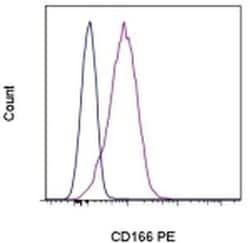
Description
- Description: The monoclonal antibody P1H12 recognizes CD146 also known as MUC18, s-endo, Endo-CAM and Mel-CAM, which is a member of the Ig superfamily of proteins
- The expression of CD146 is found on endothelial cells, bone marrow fibroblasts and some tumors (especially melanoma)
- Recently mesenchymal stromal cells and endometrial stromal cells have also been shown to express CD146
- The presence of CD146 on circulating blood cells have been confined to a subset of T cells rather than circulating endothelial cells, as expression of other endothelial markers (CD31 and CD51/61) is negative
- Expression can be found on activated lymphocytes
- The protein is heavily glycosylated with more than 50% of the mass from carbohydrates
- The antibody P1H12 has been reported to crossreact to mouse, rabbit, canine, but not rat
- Applications Reported: This P1H12 antibody has been reported for use in flow cytometric analysis
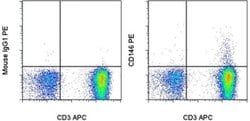
- Applications Tested: This P1H12 antibody has been pre-titrated and tested by flow cytometric analysis of normal human peripheral blood cells and Human Umbilical Vein Cells (HUVEC)
- This can be used at 5 μL (0.25 μg) per test
- A test is defined as the amount (μg) of antibody that will stain a cell sample in a final volume of 100 μL
- Cell number should be determined empirically but can range from 10^5 to 10^8 cells/test
- Excitation: 488 nm; Emission: 520 nm; Laser: Blue Laser
- Filtration: 0.2 μm post-manufacturing filtered
- CD146 (MCAM) is an integral membrane glycoprotein belonging to the immunoglobulin superfamily
- CD146 is expressed at cell-cell junctions in all endothelial cells, and has also been observed in other normal and malignant cell types
- In addition to its recognized role as a calcium-independent cell adhesion molecule, CD146 may also act as a signal transduction molecule in the recruitment of Fyn kinase, and in the subsequent tyrosine-phosphorylation of intracellular proteins involved in actin cytoskeleton assembly
- CD146 plays a role in cell adhesion, and in cohesion of the endothelial monolayer at intercellular junctions in vascular tissue
- CD146 expression may allow melanoma cells to interact with cellular elements of the vascular system, thereby enhancing hematogeneous tumor spread
- Further, CD146 could be an adhesion molecule active in neural crest cells during embryonic development
- CD146 acts also as surface receptor that triggers tyrosine phosphorylation of FYN and PTK2, and a transient increase in the intracellular calcium concentration.