CD66c Monoclonal Antibody (KOR-SA3544), PE, eBioscience™, Invitrogen™
Mouse Monoclonal Antibody
Manufacturer: Fischer Scientific
The price for this product is unavailable. Please request a quote
Antigen
CD66c
Concentration
5 μL/Test
Classification
Monoclonal
Form
Liquid
Regulatory Status
RUO
Formulation
PBS with 0.2% BSA and 0.09% sodium azide; pH 7.2
Gene Alias
BGP; BGP-1; carcinoembryonic antigen related cell adhesion molecule 6; carcinoembryonic antigen-related cell adhesion molecule 6; carcinoembryonic antigen-related cell adhesion molecule 6 (non-specific cross reacting antigen); CD66a; CD66c; CD66d; CD66e; CEA; CEACAM-1; CEACAM-3; CEACAM-5; CEACAM6; CEACAM-6; CEAL; CGM1; Cluster of Differentiation 66c; NCA; Non-specific crossreacting antigen; Normal cross-reacting antigen; pan CEACAM
Gene Symbols
CEACAM6
Primary or Secondary
Primary
Content And Storage
4° C, store in dark, DO NOT FREEZE!
Gene
CEACAM6
Clone
KOR-SA3544
Applications
Flow Cytometry
Conjugate
PE
Host Species
Mouse
Target Species
Human
Gene Accession No.
P40199
Gene ID (Entrez)
4680
Isotype
IgG1 κ
Purification Method
Affinity chromatography
Product Type
Antibody
Related Products

Description
- Description: This KOR-SA3544 monoclonal antibody reacts with human CD66c (also known as CEACAM6), which is one of the splice variants of CD66
- CD66c is expressed on endothelial and epithelial cells, as well as on neutrophils and monocytes
- Myeloma and cancer cells, such as B-cell acute lymphoblastic lymphomas, also express CD66c
- Moreover, expression of this receptor can be induced on T cells, B cells, and CD16-negative NK cells
- Like the other CD66 splice variants, CD66c is involved in cell adhesion and growth, neutrophil activation, and signaling
- Moreover, expression of CD66c in leukemic cells has been correlated with BCR/ABL1 rearrangement
- Finally, studies have shown that the CD66 variants interact with each other homo- and heterotypically
- Applications Reported: This KOR-SA3544 antibody has been reported for use in flow cytometric analysis
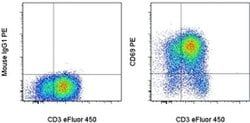
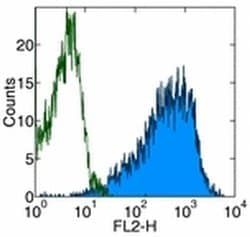
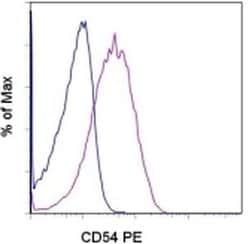
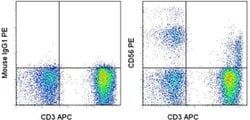
- Applications Tested: This KOR-SA3544 antibody has been pre-titrated and tested by flow cytometry analysis of normal human peripheral blood cells
- This can be used at 5 μL (0.125 μg) per test
- A test is defined as the amount (μg) of antibody that will stain a cell sample in a final volume of 100 μL
- Cell number should be determined empirically but can range from 10^5 to 10^8 cells/test
- Excitation: 488-561 nm; Emission: 578 nm; Laser: Blue Laser, Green Laser, Yellow-Green Laser
- Filtration: 0.2 μm post-manufacturing filtered
- CEA Cell Adhesion Molecule 6 (CEACAM6) belongs to the carcinoembryonic antigen (CEA) family whose members are glycosyl phosphatidyl inositol (GPI) anchored cell surface glycoproteins
- Members of this family play a role in cell adhesion and are widely used as tumor markers in serum immunoassay determinations of carcinoma
- CEACAM6 affects the sensitivity of tumor cells to adenovirus infection
- The acts as a receptor for adherent-invasive E
- coli adhesion to the surface of ileal epithelial cells in patients with Crohn's disease.