7069144
VEGF Receptor 3 Monoclonal Antibody (AFL4), Biotin, eBioscience™, Invitrogen™
Rat Monoclonal Antibody
Manufacturer: Fischer Scientific
The price for this product is unavailable. Please request a quote
Antigen
VEGF Receptor 3
Concentration
0.5 mg/mL
Classification
Monoclonal
Form
Liquid
Regulatory Status
RUO
Formulation
PBS with 0.09% sodium azide; pH 7.2
Gene Alias
AI323512; Chy; chylous ascites; Flt4; FLT-4; FLT41; fms related tyrosine kinase 4; FMS-like tyrosine kinase 4; fms-related tyrosine kinase 4; LMPH1A; PCL; receptor protein tyrosine kinase; soluble VEGFR 3; sVEGFR 3; tyrosine-protein kinase receptor FLT4; Vascular endothelial growth factor receptor 3; vascular endothelial growth factor receptor-3; VEGF R3; VEGFR3; VEGFR-3
Gene Symbols
FLT4
Primary or Secondary
Primary
Content And Storage
4° C, store in dark, DO NOT FREEZE!
Gene
FLT4
Clone
AFL4
Applications
Flow Cytometry
Conjugate
Biotin
Host Species
Rat
Target Species
Mouse
Gene Accession No.
P35917
Gene ID (Entrez)
14257
Isotype
IgG2a κ
Purification Method
Affinity chromatography
Product Type
Antibody
Related Products


Description
- Description: The AFL4 monoclonal antibody reacts with the mouse VEGF receptor-3, also known as Flt-4
- This 195 kDa molecule was identified as an endothelial-specific member of the receptor tyrosine kinase (RTK) family
- During early embryogenesis all endothelial cells express VEGFR-3, while in the adult tissues, VEGFR-3 expression disappears from the vascular endothelial cells and is observed only on the lymphatic endothelium
- However, VEGFR-3 expression is induced in the adult tissue upon tumor implementation suggesting an important role for this receptor in the tumor angiogenesis
- VEGF-C and VEGF-D bind to and activate VEGFR-3
- AFL4 is an antagonist mAb
- Applications Reported: The AFL4 antibody has been reported for use in flow cytometric analysis
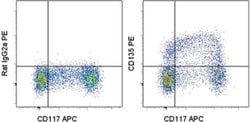
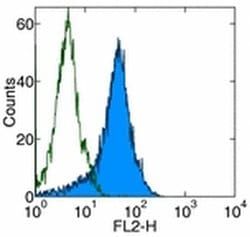
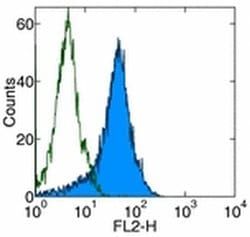
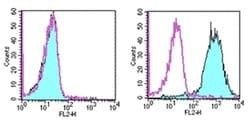
- Applications Tested: The AFL4 antibody has been tested by flow cytometric analysis of in vitro differentiated mouse endothelial cells
- In brief, mouse ES cells were incubated on collagen IV matrix for 4 days and subsequently stimulated with VEGF under serum free conditions to induce further differentiation
- This can be used at less than or equal to 0.5 μg per test
- A test is defined as the amount (μg) of antibody that will stain a cell sample in a final volume of 100 μL
- Cell number should be determined empirically but can range from 10^5 to 10^8 cells/test
- It is recommended that the antibody be carefully titrated for optimal performance in the assay of interest
- Filtration: 0
- Vascular endothelial growth factor is a key regulator of blood vessel development in embryos and angiogenesis in adult tissues
- Unlike VEGF, the related VEGFC stimulates the growth of lymphatic vessels through its specificl ymphatic endothelial receptor VEGFR-3
- In 1998, Dumont showed that targeted inactivation of the VEGFR-3 gene in mice resulted in defective blood vessel development in early embryos
- Vasculogenesis and angiogenesis occurred, but large vessels became abnormally organized with defective lumens, leading to fluid accumulation in the pericardial cavity and cardiovascular failure at embryonic day 9.5
- Thus, VEGFR3 has an essential role in the development of theembryonic cardiovascular system before the emergence of the lymphatic vessels.