MERTK Monoclonal Antibody (DS5MMER), eBioscience™, Invitrogen™
Rat Monoclonal Antibody
Manufacturer: Fischer Scientific
The price for this product is unavailable. Please request a quote
Antigen
MERTK
Concentration
0.5 mg/mL
Classification
Monoclonal
Form
Liquid
Regulatory Status
RUO
Formulation
PBS with 0.09% sodium azide; pH 7.2
Gene Alias
c-Eyk; c-mer; c-mer proto-oncogene tyrosine kinase; Eyk; MER; MER proto-oncogene, tyrosine kinase; MER receptor tyrosine kinase; MERTK; MGC133349; nmf12; Nyk; Proto-oncogene c-Mer; proto-oncogene tyrosine-protein kinase MER; rdy; receptor tyrosine kinase MerTK; Receptor tyrosine tinase gene probably the gene for Rdy; retinal dystrophy; RP38; sMER; sMERTK; soluble MER; soluble MERTK; STK kinase; Tyro 12; Tyro12; Tyrosine-protein kinase Mer
Gene Symbols
Mertk
Isotype
IgG2a κ
Purification Method
Affinity chromatography
Product Type
Antibody
Clone
DS5MMER
Applications
Flow Cytometry, Immunocytochemistry, Immunohistochemistry (Frozen), Immunoprecipitation, Western Blot
Conjugate
Unconjugated
Host Species
Rat
Target Species
Mouse
Gene Accession No.
Q60805
Gene ID (Entrez)
17289
Immunogen
FC-tagged full protein expressed in insect cells
Primary or Secondary
Primary
Content And Storage
4° C
Gene
Mertk
Related Products





Description
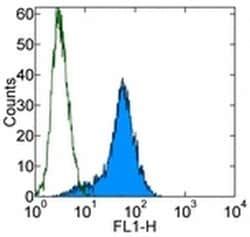
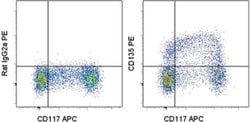
- Description: This DS5MMER monoclonal antibody recognizes mouse MerTK, a 170-210 kDa member of the TAM family of tyrosine kinase receptors that also includes Axl and Tyro3
- MerTK is expressed on tissue macrophages and is involved in the removal of apoptotic cells
- This process relies on two soluble ligands of MerTK, Protein S and Gas6 that bind to phosphatidylserine found on the outer leaflet of the plasma membrane of cells undergoing apoptosis
- Upon binding these ligands, MerTK undergoes autophosphorylation at multiple tyrosine residues that activate the PI3K and Akt pathways
- This results in the phagocytosis of apoptotic cells and also results in the direct inhibition of TLR-induced production of pro-inflammatory cytokines
- In addition, MerTK may function as a putative entry receptor for filoviruses
- Deficiency of MerTK causes general autoimmunity, inflammation and accumulation of apoptotic bodies
- MerTK is constitutively released from the cell surface by metalloproteinases and thus is present in the serum and culture medium
- This process can be enhanced by stimulation with LPS
- MerTK can be used to help discriminate macrophages from dendritic cells
- MerTK is often expressed on maligt cells and may be implicated in immune evasion
- The DS5MMER antibody will work on paraformaldehyde-fixed cells
- In addition, this antibody was demonstrated to inhibit Gas6-induced MerTK phosphorylation with the IC50 < 5 nM
- MERTK (cMER) is a tyrosine kinase proto-oncogene and is involved in the retinal pigment epithelium (RPE) phagocytosis pathway, which is implicated in human retinal disease
- Regulates many physiological processes including cell survival, migration, differentiation, and phagocytosis of apoptotic cells (efferocytosis)
- Ligand binding at the cell surface induces autophosphorylation of MERTK on its intracellular domain that provides docking sites for downstream signaling molecules
- Following activation by ligand, interacts with GRB2 or PLCG2 and induces phosphorylation of MAPK1, MAPK2, FAK/PTK2 or RAC1
- MERTK signaling plays a role in various processes such as macrophage clearance of apoptotic cells, platelet aggregation, cytoskeleton reorganization and engulfment
- Functions in the retinal pigment epithelium (RPE) as a regulator of rod outer segments fragments phagocytosis
- Plays also an important role in inhibition of Toll-like receptors (TLRs)-mediated innate immune response by activating STAT1, which selectively induces production of suppressors of cytokine signaling SOCS1 and SOCS3.