7091341
IL-21 Monoclonal Antibody (eBio3A3-N2 (3A3-N2)), eFluor™ 660, eBioscience™, Invitrogen™
Mouse Monoclonal Antibody
Manufacturer: Fischer Scientific
The price for this product is unavailable. Please request a quote
Antigen
IL-21
Concentration
5 μL/Test
Classification
Monoclonal
Form
Liquid
Regulatory Status
RUO
Formulation
PBS with 0.2% BSA and 0.09% sodium azide; pH 7.2
Gene Alias
CVID11; CX2; il 21; IL21; IL-21; ILN; Interleukin; interleukin 21; Interleukin21; interleukin-21; interleukin-21 isoform; porcine interleukin-21; Za11
Gene Symbols
IL21
Primary or Secondary
Primary
Content And Storage
4° C, store in dark, DO NOT FREEZE!
Gene
IL21
Clone
eBio3A3-N2 (3A3-N2)
Applications
Flow Cytometry
Conjugate
eFluor 660
Host Species
Mouse
Target Species
Human
Gene Accession No.
Q9HBE4
Gene ID (Entrez)
59067
Isotype
IgG1 κ
Purification Method
Affinity chromatography
Product Type
Antibody
Related Products


Description
- Description: The monoclonal antibody eBio3A3-N2 reacts with human IL-21, a potent stimulator of NK and cytolytic T cells
- IL-21 is a 131 amino acid protein most closely related to IL-2 and IL-15
- Expression is found in CD4+ cells upon activation
- In addition to its effect on NK cells, IL-21 stimulates proliferation of B-cell stimulated by crosslinking of the CD40 antigen and stimulates the proliferation of bone marrow progenitor cells and the expression of the NK-cell marker CD56 in the presence of IL-15
- Applications Reported: This eBio3A3-N2 (3A3-N2) antibody has been reported for use in intracellular staining followed by flow cytometric analysis
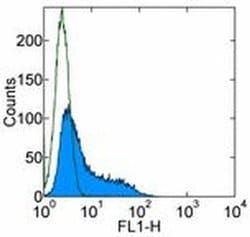
- Applications Tested: This eBio3A3-N2 (3A3-N2) antibody has been pre-titrated and tested by intracellular staining and flow cytometric analysis of restimulated, Th17-polarized normal human peripheral blood cells
- This can be used at 5 μL (0.125 μg) per test
- A test is defined as the amount (μg) of antibody that will stain a cell sample in a final volume of 100 μL
- Cell number should be determined empirically but can range from 10^5 to 10^8 cells/test
- Staining for IL-21 has shown donor variability
- stimulation times may vary depending on the donor and should be optimized
- Increased staining levels have been observed on Th17-polarized normal human peripheral blood cells
- eFluor™ 660 is a replacement for Alexa Fluor™ 647
- IL-21 is a 17 kDa immunomodulatory cytokine produced mainly by Natural Killer Cells (NKT), T helper (Th) 17 and T follicular helper (TFH) cells
- In TFH cells, IL-21 expression leads to autocrine signaling through the IL-21 receptor (IL-21R) and STAT3, which leads to additional transcriptional activation by Bcl6
- As with IFN gamma for Th1 and IL-4 for Th2 cells, IL-21 is critical for TFH cell development and effector function
- IL-21 plays a role in T cell-dependent B cell differentiation into plasma cells and memory cells, stimulation of IgG production and induction of apoptotic signaling in naive B cells
- In Th17 cells, IL-21 expression and autocrine feedback through STAT3, IRF4 and ROR gamma t lead to upregulation of the IL-23R, thereby preparing Th17 cells for maturation and maintenance by the inflammatory cytokine IL-23
- While upregulating IRF4 and ROR gamma t, IL-21 also mediates the downregulation of Foxp3
- IL-21 deficient mice are protected from developing colitis upon chemical treatment by their inability to upregulate Th17-associated molecules
- In comparison, elevated levels of IL-21 are present in chemically-induced colitis mouse models.