7143940
B7-H3/CD276 Recombinant Rabbit Monoclonal Antibody (BLR025F), Bethyl Laboratories
Rabbit Recombit Monoclonal Antibody
Manufacturer: Fischer Scientific
The price for this product is unavailable. Please request a quote
Antigen
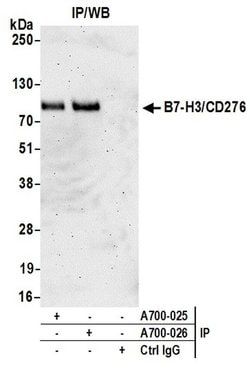
B7-H3/CD276
Applications
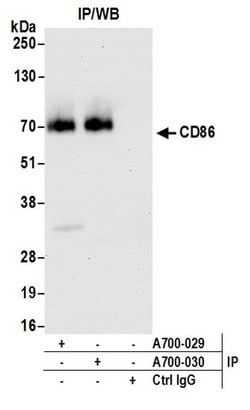
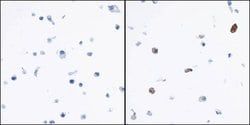
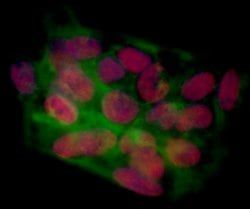
Immunocytochemistry, Immunohistochemistry, Immunoprecipitation, Western Blot
Conjugate
Unconjugated
Host Species
Rabbit
Target Species
Human
Gene Accession No.
Q5ZPR3
Gene ID (Entrez)
80381
Immunogen
between 484 to 534
Primary or Secondary
Primary
Content And Storage
4° C
Gene
CD276
Clone
BLR025F
Classification
Recombinant Monoclonal
Form
Liquid
Regulatory Status
RUO
Formulation
BBS with 0.09% sodium azide; pH 8.2
Gene Alias
PSEC0249; 4Ig-B7-H3; B7-H3; B7H3; B7RP-2; B7 homolog 3; CD276 antigen; costimulatory molecule; HB7H3
Gene Symbols
CD276
Isotype
IgG
Purification Method
Antigen affinity chromatography
Product Type
Antibody
Related Products
Description
- The recommended shelf life for this product is 1 year from date of receipt
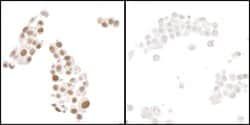
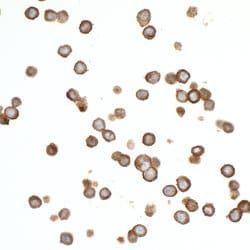
- Application Note: For ICC, epitope retrieval with citrate buffer pH 6.0 is recommended for FFPE cell sections
- For IHC, epitope retrieval with citrate buffer pH 6.0 is recommende CD276 is a member of the B7 family of co-stimulatory molecules also known as B7-H3
- CD276 is a type I transmembrane protein that induces the proliferation of CD4+ and CD8+ T cells, enhances the generation of cytotoxic T cells and selectively stimulates the production of interferon gamma
- Expression of CD276 can be induced on dendritic cells and monocytes by inflammatory cytokines, and is also widely expressed in peripheral tissues including the heart, kidney, testis and colon
- In humans, CD276 exists as two isoforms which result from gene duplication and differential splicing
- CD276 is reported to have therapeutic potential for the regulation of cell-mediated immune responses to cancer, particularly in conjunction with anti-angiogenic therapy.