7144206
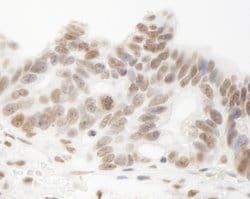
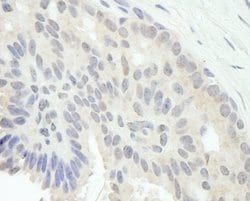
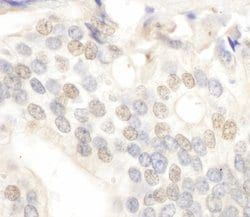
WRNIP1 Polyclonal Antibody, Bethyl Laboratories
Rabbit Polyclonal Antibody
Manufacturer: Fischer Scientific
The price for this product is unavailable. Please request a quote
Antigen
WRNIP1
Classification
Polyclonal
Form
Liquid
Regulatory Status
RUO
Formulation
TBS with 0.1% BSA and 0.09% sodium azide
Gene Alias
FLJ22526, RP11-420G6.2, WHIP, bA420G6.2
Immunogen
Between 400 and 450
Primary or Secondary
Primary
Content And Storage
4° C
Gene
WRNIP1
Applications
Immunofluorescence, Immunohistochemistry
Conjugate
Unconjugated
Host Species
Rabbit
Target Species
Human, Mouse
Gene Accession No.
Q91XU0, Q96S55
Gene ID (Entrez)
56897, 78903
Isotype
IgG
Purification Method
Antigen affinity chromatography
Product Type
Antibody
Related Products
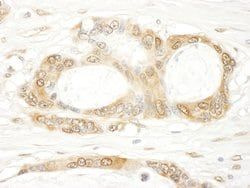
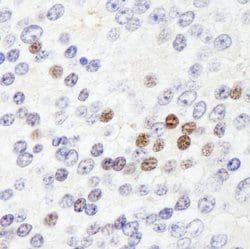
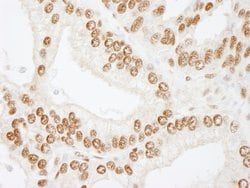
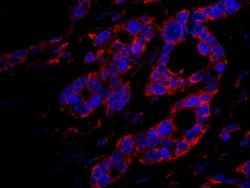

Description
- The recommended shelf life for this product is 1 year from date of receipt
- Based on 100% sequence identity, this antibody is predicted to react with Rat, Dog, Horse, Panda, Orangutan, Monkey, Gorilla, Chimpanzee, Naked mole rat, Chinese hamster a Werner's syndrome is a rare autosomal recessive disorder characterized by premature aging
- The protein encoded by this gene interacts with the N-terminal portion of Werner protein containing the exonuclease domain
- This protein shows homology to replication factor C family proteins, and is conserved from E
- coli to human
- Studies in yeast suggest that this gene may influence the aging process
- Two transcript variants encoding different isoforms have been isolated for this gene.