7144545
YAP1 Polyclonal Antibody, Bethyl Laboratories
Rabbit Polyclonal Antibody
Manufacturer: Fischer Scientific
The price for this product is unavailable. Please request a quote
Antigen
YAP1
Classification
Polyclonal
Form
Liquid
Regulatory Status
RUO
Formulation
TBS with 0.1% BSA and 0.09% sodium azide
Gene Alias
YAP, YAP2, YAP65, YKI
Gene Symbols
YAP1
Isotype
IgG
Purification Method
Antigen affinity chromatography
Product Type
Antibody
Applications
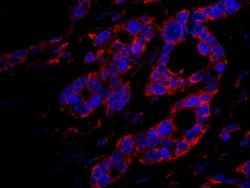
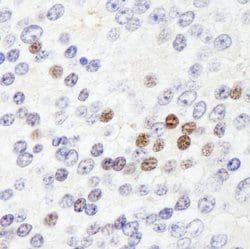
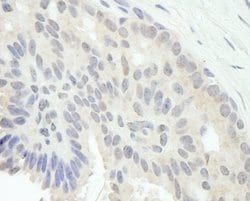
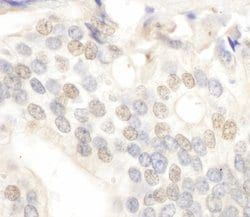
Immunofluorescence, Immunohistochemistry
Conjugate
Unconjugated
Host Species
Rabbit
Target Species
Human
Gene Accession No.
P46937
Gene ID (Entrez)
10413
Immunogen
Between 350 and 400
Primary or Secondary
Primary
Content And Storage
4° C
Gene
YAP1
Related Products
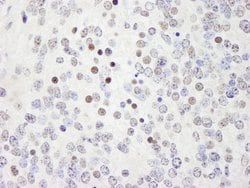
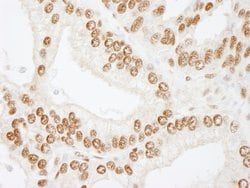

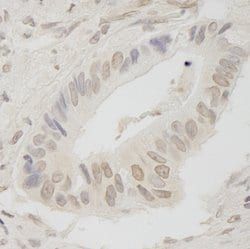
Description
- The recommended shelf life for this product is 1 year from date of receipt
- Based on 100% sequence identity, this antibody is predicted to react with Sheep, Bovine, Dog, Horse, Pig, Panda, Orangutan, Monkey, Gorilla, Chimpanzee, Naked mole rat and YAP (Yes-Associated Protein) is a founding member of the WW domain family of proteins, transcriptional co-activator and oncogene
- Its gene is transcriptionally activated in squamous cell carcinoma cells
- YAP can act both as a coactivator and corepressor and is the critical downstream regulatory target in the Hippo signaling pathway
- The Hippo signaling pathway plays a pivotal role in organ size control and tumour suppression by restricting proliferation and promoting apoptosis
- Also plays key roles in tissue tension, 3D tissue shape, cell proliferation, cell death, and cell migration
- Mutations in the IRF5 gene results in coloboma.