7144251
eEF2 Kinase Polyclonal Antibody, Bethyl Laboratories
Rabbit Polyclonal Antibody
Manufacturer: Fischer Scientific
The price for this product is unavailable. Please request a quote
Antigen
eEF2 Kinase
Classification
Polyclonal
Form
Liquid
Regulatory Status
RUO
Formulation
TBS with 0.1% BSA and 0.09% sodium azide
Gene Alias
calcium/calmodulin-dependent eukaryotic elongation factor 2 kinase; calcium/calmodulin-dependent eukaryotic elongation factor-2 kinase; calmodulin-dependent protein kinase III; eEF-2 kinase; elongation factor-2 kinase; eukaroytic elongation factor 2 kinase; eukaryotic elongation factor 2 kinase
Immunogen
Between 675 and 725
Primary or Secondary
Primary
Content And Storage
4° C
Gene
EEF2K
Applications
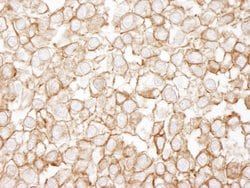
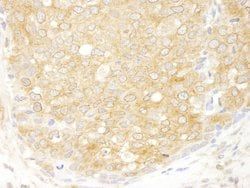
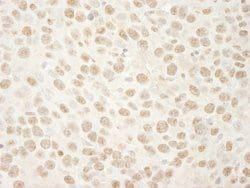
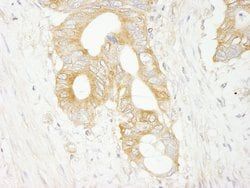
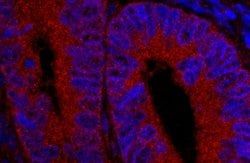
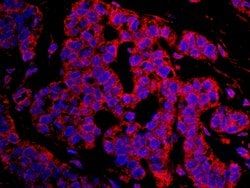
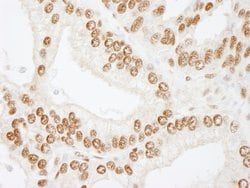
Immunofluorescence, Immunohistochemistry
Conjugate
Unconjugated
Host Species
Rabbit
Target Species
Human, Mouse
Gene Accession No.
O00418, O08796
Gene ID (Entrez)
13631, 29904
Isotype
IgG
Purification Method
Antigen affinity chromatography
Product Type
Antibody
Related Products

Description
- The recommended shelf life for this product is 1 year from date of receipt
- Based on 100% sequence identity, this antibody is predicted to react with Rat, Bovine, Dog, Horse, Rabbit, Guinea pig_10141, Pig, Panda, Orangutan, Monkey, Gorilla, EEF2K (eukaryotic elongation factor 2 kinase) is a threonine kinase that regulates protein synthesis by controlling the rate of peptide chain elongation
- Up activation, by a variety of upstream kinases including AMPK or TRPM7, EEF2K phosphorylates the elongation factor EEF2 at a single site
- Then, EEF2K renders EEF2 unable to bind ribosomes and inactive - in turn, the rate of protein synthesis is reduced.