Tex19.1, Mouse anti-Mouse, Clone: 7TEX-1F11, Millipore Sigma™
Mouse Monoclonal Antibody
Manufacturer: Fischer Scientific
The price for this product is unavailable. Please request a quote
Antigen
Tex19.1
Dilution
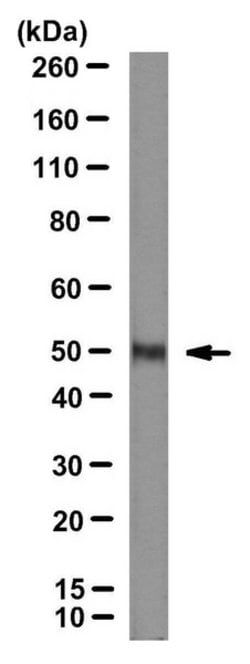
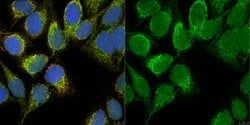
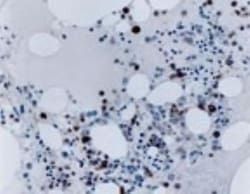
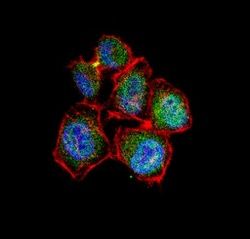
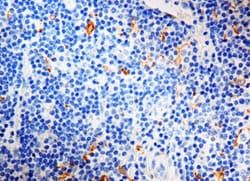
Immunohistochemistry (Paraffin) Analysis: A 1:250 dilution from a representative lot detected Tex19.1 in embryonic mouse brain and embryonic mouse gut tissue sections.Immunocytochemistry Analysis: A representative lot detected Tex19.1 in Immunocytochemistry applications (Tarabay, Y., et. al. (2013). Hum Reprod. 28(8):2201-14).ELISA Analysis: A representative lot detected Tex19.1 in ELISA applications (Tarabay, Y., et. al. (2013). Hum Reprod. 28(8):2201-14).Immunoprecipitation Analysis: A representative lot immunoprecipitated Tex19.1 in Immunoprecipitation applications (Tarabay, Y., et. al. (2017). J Cell Sci. 130(8):1463-1474).Western Blotting Analysis: A representative lot detected Tex19.1 in Western Blotting applications (Tarabay, Y., et. al. (2013). Hum Reprod. 28(8):2201-14;Tarabay, Y., et. al. (2017). J Cell Sci. 130(8):1463-1474).
Classification
Monoclonal
Form
Purified
Regulatory Status
RUO
Target Species
Mouse
Gene Alias
Testis-expressed protein 19.1;mTex19.1;Testis-expressed protein 19A
Gene Symbols
Tex19.1;Tex19;Tex19a
Isotype
IgG2b κ
Purification Method
Protein G purified
Test Specificity
Clone 7TEX-1F11 detects murine Testis-expressed protein 19.1 (Tex 19).
Clone
7TEX-1F11
Applications
ELISA, Immunocytochemistry, Immunohistochemistry (Paraffin), Immunoprecipitation, Western Blot
Conjugate
Unconjugated
Host Species
Mouse
Research Discipline
Signaling
Formulation
Purified mouse monoclonal antibody IgG2b in buffer containing 0.1 M Tris-Glycine (pH 7.4), 150 mM NaCl with 0.05% sodium azide.
Gene ID (Entrez)
NP_082878
Immunogen
His-tagged full-length recombinant mouse Testis-expressed protein 19.1 (Tex 19).
Primary or Secondary
Primary
Content And Storage
Stable for 1 year at 2-8°C from date of receipt.
Related Products
Description
- Anti-Tex19.1, clone 7TEX-1F11, Cat
- No
- MABC1596, is a mouse monoclonal antibody that detects Testis-expressed protein 19.1 and has been tested for use in ELISA, Immunocytochemistry, Immunohistochemistry (Paraffin), Immunoprecipitation, and Western Blotting
- Testis-expressed protein 19.1 (UniProt: Q99MV2; also known as mTex19.1, Testis-expressed protein 19A) is encoded by the Tex19.1 (also known as Tex19, Tex19a) gene (Gene ID: 73679) in murine species
- Tex19.1 resides in the germline to repress transposable genetic elements and maintain genomic stability
- It is expressed in testis, placenta, ovary, and in pluripotent stem cells
- In testis its expression is highest in mitotic spermatogonia and decreases as spermatocytes progress through meiosis
- Tex19.1 expression is reported to be down-regulated by Deleted in azoospermia-like (DAZL) protein, which binds to 3'UTR of Tex19.1 mRNAs and repress its translation
- Tex19.1 is required during spermatogenesis and placenta development where it participates in the repression of retrotransposable elements and prevents their mobilization
- Tex19.1, along with its paralog, Tex19.2, is shown to collaborate with the Piwi-interacting RNA (piRNA) pathway, which mediates the repression of transposable elements during meiosis by forming complexes composed of piRNAs and Piwi proteins
- Embryos with mutations in Tex19.1 gene exhibit intra-uterine growth retardation and have small placentas due to a reduction in the number of spongiotrophoblast, glycogen trophoblast and sinusoidal trophoblast giant cells
- Loss of Tex19.1 is shown to cause growth defect and early post-natal lethality
- Male animals with deficiency of both Tex19.1 and Tex19.2 display impaired spermatogenesis, small testes, and are infertility.