Aquaporin-4, Mouse anti-Human, Rat, Mouse, Clone: mCCD, Millipore Sigma™
Mouse Monoclonal Antibody
Manufacturer: Fischer Scientific
The price for this product is unavailable. Please request a quote
Antigen
Aquaporin-4
Dilution
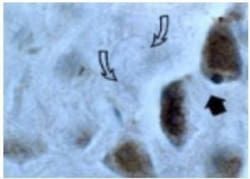
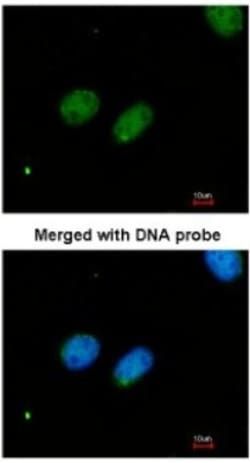
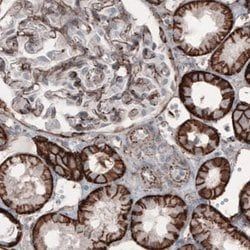
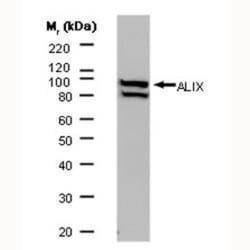
Western Blotting Analysis: A representative lot detected Aquaporin-4 in Western Blotting applications (Hinson, S.R., et. al. (2017). Proc Natl Acad Sci U S A. 114(21):5491-5496).Immunoprecipitation Analysis: A representative lot immunoprecipitated Aquaporin-4 in Immunoprecipitation applications (Hinson, S.R., et. al. (2017). Proc Natl Acad Sci U S A. 114(21):5491-5496).Immunocytochemistry Analysis: A representative lot detected Aquaporin-4 in Immunocytochemistry applications (Hinson, S.R., et. al. (2017). Proc Natl Acad Sci U S A. 114(21):5491-5496).
Classification
Monoclonal
Form
Purified
Regulatory Status
RUO
Target Species
Human, Rat, Mouse
Gene Alias
AQP-4;Mercurial-insensitive water channel;MIWC;WCH4
Gene Symbols
AQP4
Isotype
IgG3 κ
Purification Method
Protein G purified
Test Specificity
Clone mCCD specifically detects Aquaporin-4 in human, mouse, and rat brain tissue sections. It targets an epitope with in 71 amino acids from the cytoplasmic domain from the C-terminal region.
Clone
mCCD
Applications
Immunocytochemistry, Immunohistochemistry, Immunoprecipitation, Western Blot
Conjugate
Unconjugated
Host Species
Mouse
Research Discipline
Neuroscience
Formulation
Purified mouse monoclonal antibody IgG3 in PBS without preservatives.
Gene ID (Entrez)
NP_001641
Immunogen
His-tagged full length human recombinant Aquaporin-4.
Primary or Secondary
Primary
Content And Storage
Stable for 1 year at -20°C from date of receipt. Handling Recommendations: Upon receipt and prior to removing the cap, centrifuge the vial and gently mix the solution. Aliquot into microcentrifuge tubes and store at -20°C. Avoid repeated freeze/thaw cycles, which may damage IgG and affect product performance.
Related Products


Description
- Anti-Aquaporin-4, clone mCCD Antibody, Cat
- No
- MABN2470, is a highly specific mouse monoclonal antibody that targets Aquaporin-4 and has been tested for use in Immunocytochemistry, Immunohistochemistry, Immunoprecipitation, and Western Blotting
- Aquaporin-4 (UniProt: P55087; also known as AQP-4, Mercurial-insensitive water channel, MIWC, WCH4) is encoded by the AGP4 gene (Gene ID: 361) in human
- Aquaporin-4 is a multi-pass membrane protein that forms a water-specific channel and serves as an osmoreceptor that regulates body water balance and mediates water flow within the central nervous system
- Its extracellular domains are localized to amino acids 58-64, 137-155, and 206-231); its transmembrane domains are in amino acids 37-57, 65-85, 116-136, 156-176, 185-205, and 232-252); and the cytoplasmic domain is in amino acids 1-36, 86-115, 177-184, and 253-323)
- Aquaporin-4 is largely expressed in the brain and the skeletal muscle and at lower levels in heart, kidney, and lung tissue
- Phosphorylation of Aquaporin-4 at Serine 180 by protein kinase C is shown to reduce conductance by about 50%, whereas phosphorylation at Serine 111 by protein kinase G in response to glutamate can increase conductance by about 40%
- Two isoforms of Aquaporin-4 have been described that are produced by alternative splicing
- Antibodies to Aquaporin-4 can serve as useful serum markers to distinguishing neuromyelitis optica (NM) from multiple sclerosis
- Clone mCCD does not cause redistribution of Aquaporin-4 and also it does not affect coaggregation astrocytic CD32-B and Aquaporin-4
- (Ref.: Hinson, SR et al
- (2017)
- Proc
- Natl
- Acad
- Sci
- USA 114(21); 5491-5496).